How to Improve Your Brand’s Position in ChatGPT Results?
Share this Article:


AI-generated answers are changing how people find brands, products, and services. Instead of scanning a page of links, users ask ChatGPT a question and get a direct response, often with specific brand recommendations folded in. For businesses, visibility inside those responses is becoming as commercially important as a first-page ranking ever was.
So what does it mean to “rank” in ChatGPT? There is no position one or two. ChatGPT either mentions your brand or it does not. Closing that gap requires a different approach than traditional SEO. It is about building the kind of credibility, structure, and content depth that AI models recognize as worth referencing.
Want your brand to show up in ChatGPT answers? Learn the key strategies to earn mentions and stay visible in AI-generated results.
How ChatGPT Decides Which Brands to Mention
ChatGPT pulls from two distinct places when generating responses. The first is its training data, a large body of web content absorbed before its knowledge cutoff. The second is real-time web search, primarily through Bing, which lets ChatGPT pull current information for time-sensitive queries. Brands that appear across both sources have a much stronger chance of being referenced.
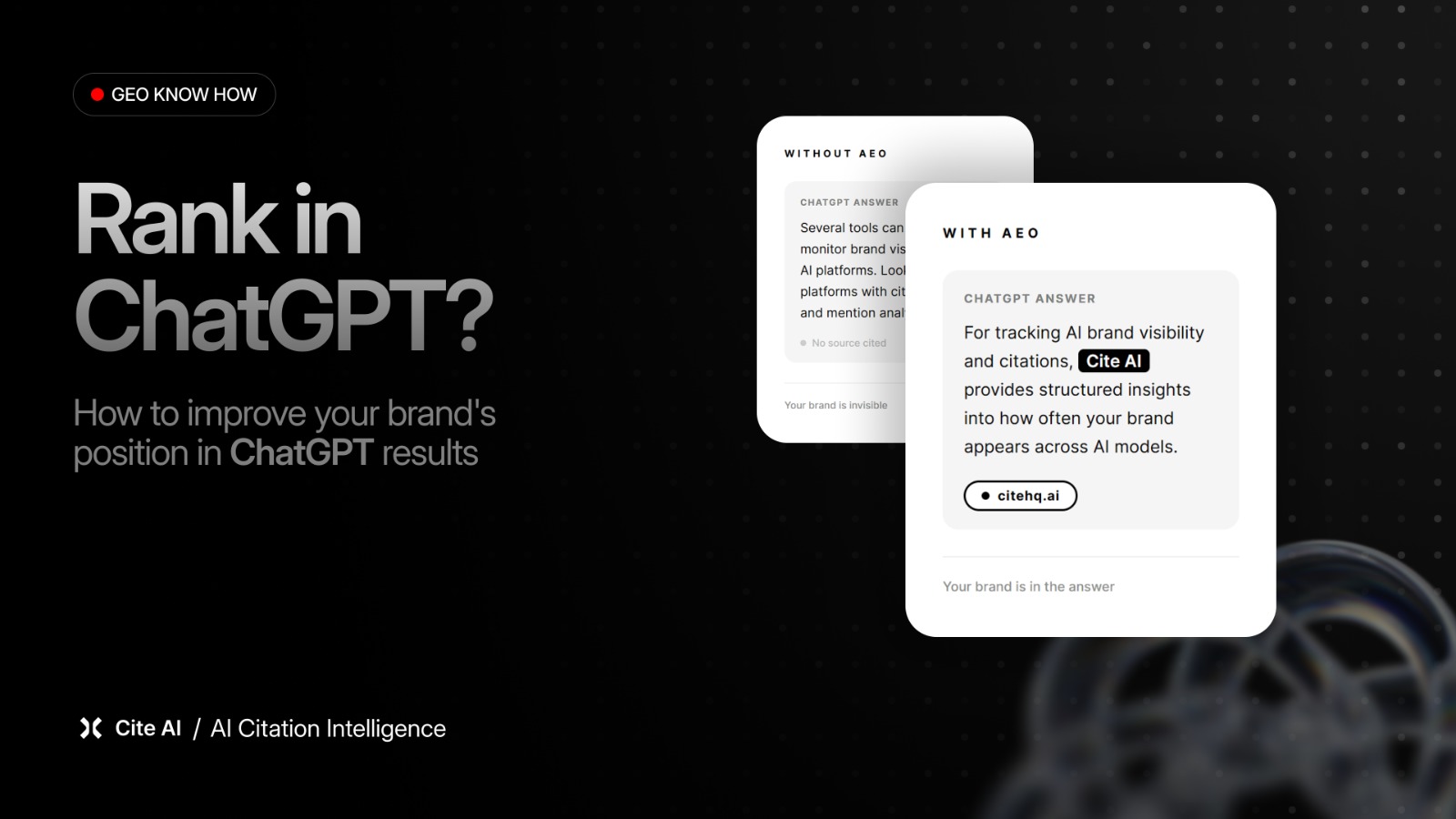
There is also a real difference between a brand mention and a brand citation. A mention means your name appears in a response. A citation means ChatGPT points to your content as a source. Citations carry more weight and typically require content that is specific, authoritative, and structured clearly enough for the model to reference with confidence.
Authority signals shape all of this. How often a brand appears across reputable third-party sources, how consistent its entity information is across the web, how much depth it has published within its area of expertise. Brands featured in high-quality publications, industry directories, and trusted review platforms are far more likely to surface when users ask ChatGPT for recommendations. This is the core of improving ChatGPT brand ranking.
Optimize Your Content for Conversational Queries
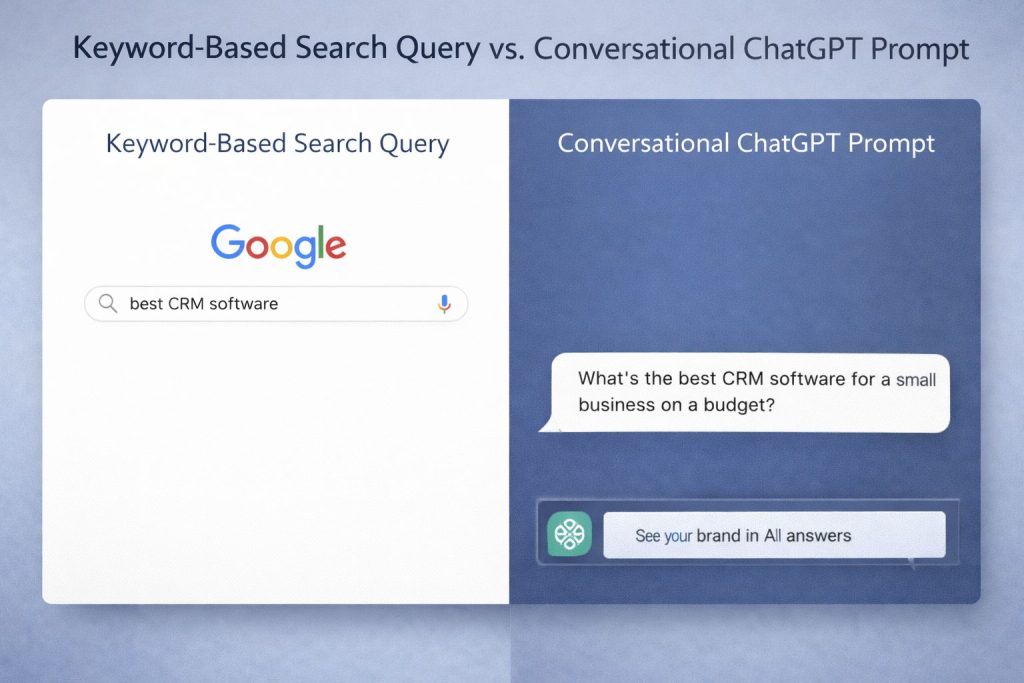
People phrase questions to ChatGPT very differently than they type into Google. A traditional search query looks like “best CRM software 2024.” A ChatGPT prompt reads more like: “What is the best CRM for a small e-commerce business with a tight budget?” Content that mirrors this conversational structure performs better in AI-generated responses.
To improve ChatGPT brand ranking, restructure existing content to match how questions are actually asked. Write in plain, direct language. Answer the question fully within the first few sentences. Avoid filler that delays the point. FAQ sections, definition-led pages, and content that opens with a clear answer before expanding on it are formats ChatGPT consistently favors when generating responses.
Build Authority Across Third-Party Sources
To improve your brand’s visibility in ChatGPT results, you need to go beyond your own website and establish strong authority across the wider web.
1. Prioritize Off-Site Authority Signals
On-site content alone is not enough. ChatGPT evaluates how your brand is mentioned across external platforms to determine credibility and relevance.
2. Get Featured on High-Authority Platforms
Focus on placements in industry publications, software review sites, business directories, and press outlets. Listicles, comparison articles, and category roundups are especially valuable for visibility in AI-generated recommendations.
3. Strengthen Presence in Comparison Content
Being included in “best tools,” “top platforms,” or “alternatives” content increases your chances of being referenced when users ask AI for recommendations.
4. Leverage Reviews and Social Proof
Platforms like G2, Trustpilot, and Google Reviews play a critical role. A high volume of detailed, authentic reviews signals trust and reinforces your brand’s authority.
5. Build Consistent Brand Mentions Across the Web
Frequent, consistent mentions across multiple credible sources help AI models recognize your brand as established and relevant within your category.
Building strong third-party authority is not a one-time effort. It requires consistent visibility, credible mentions, and ongoing reinforcement across platforms that AI systems trust.
Structure Your Website So AI Can Read It
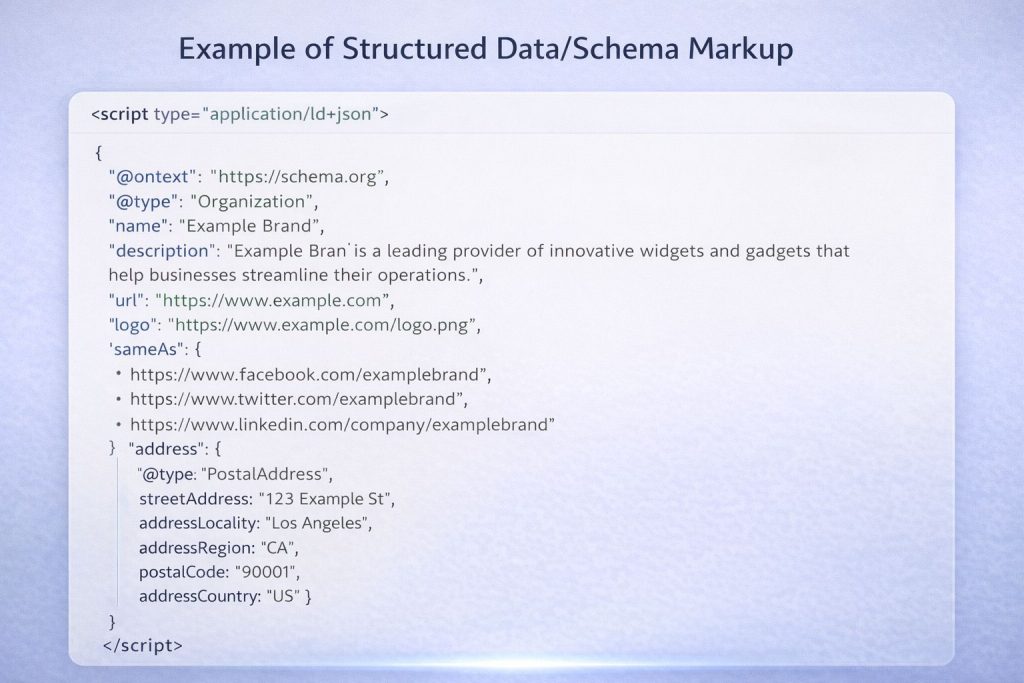
Clean website structure makes it easier for AI bots to understand what a brand is, what it offers, and where it has expertise. Structured data markup, particularly schema types like Organization, Product, FAQ, and Article, gives AI systems explicit signals about the content on each page. Brands that implement schema correctly are easier for models to interpret and reference accurately.
Site architecture matters too. Clean internal linking, logical page hierarchies, and fast load times all affect how well an AI bot can crawl and process a site. Beyond technical structure, define your entity clearly across all key pages. State your brand name, product names, and areas of expertise plainly so there is no ambiguity about what you do or who you serve.
Publish Content That ChatGPT Wants to Cite
Original research and data give ChatGPT a concrete reason to reference your brand. When a company publishes proprietary statistics, survey findings, or benchmark reports, those numbers get picked up across the web, creating multiple citation pathways back to the original source. This is one of the strongest strategies for earning ChatGPT citations and building sustained content for AI search.
Thought leadership formats, including in-depth guides, expert comparisons, and detailed how-to content, signal subject-matter authority. ChatGPT favors sources that go deep on a topic rather than covering it broadly and superficially. Topic clusters, where a brand publishes multiple related pieces linking to a central pillar page, reinforce this depth signal across an entire subject area.
Currency matters too. Content that gets updated regularly surfaces more reliably in real-time web search results. Audit high-performing pages on a set schedule. Refresh statistics, update examples, add new sections. Keep the content sharp and competitive in AI search.
How to Measure Your ChatGPT Brand Visibility
Understanding your brand’s presence in ChatGPT requires a mix of manual tracking, analytics, and specialized tools.
- Start with Manual Prompt Testing: Run queries that reflect how your audience searches. Track if your brand appears, the context of the mention, and which competitors are included alongside you.
- Establish a Baseline of Visibility: Document early results from prompt testing. This baseline helps measure progress more effectively than relying on tools alone in the initial stages.
- Monitor AI-Referred Traffic in GA4: Use GA4 to identify referral traffic coming from ChatGPT and other AI platforms. While still evolving, this data helps connect content efforts to actual traffic outcomes.
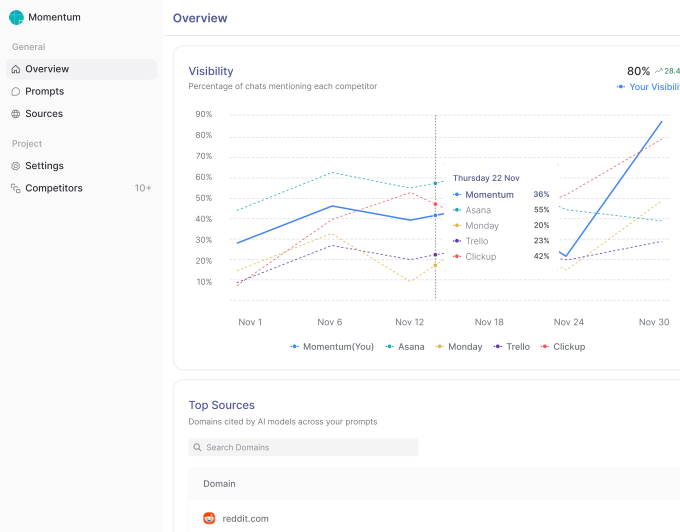
- Use LLM Monitoring Tools: Cite AI provides structured insights into how often your brand appears across AI models and the context in which it is mentioned.
- Track Meaningful Metrics, Not Just Mentions: Look beyond raw visibility. Measure sentiment, recommendation frequency, and whether your brand is positioned positively or just referenced.
- Focus on Long-Term Growth: ChatGPT visibility builds over time. Each content improvement, backlink, and mention contributes to a stronger presence in AI-generated responses.
Consistent tracking and iteration are key. The brands that measure and refine their AI visibility strategy regularly will see stronger, more reliable results over time.
Winning Visibility in ChatGPT Results
Improving your brand’s position in ChatGPT is not about chasing rankings, it is about earning recognition. AI models surface brands that are consistently credible, clearly structured, and widely referenced across the web. That means aligning your strategy across content, technical SEO, and off-site authority rather than relying on any single tactic.
The brands that win in this space are the ones that answer real questions better, publish content worth citing, and build trust signals beyond their own website. As ChatGPT and other AI platforms continue to shape how decisions are made, visibility inside these responses will increasingly influence real business outcomes.
The opportunity is still early, but it is already competitive. Brands that invest now in structured, authoritative, and AI-aligned content will not just appear more often in ChatGPT results, they will define the conversation within their category.
Understand where your brand stands in ChatGPT results and uncover opportunities to improve with Cite AI.
Start writing with confidence
Verify your content, add real citations, and publish with trust.