Prompt tracking vs keyword tracking: key differences
Share this Article:


Search behavior has shifted in a real and measurable way. A growing share of users skip fragmented Google queries entirely and ask full questions to AI engines like ChatGPT, Gemini, and Perplexity. They expect a direct answer, not a list of links to sort through. For marketers, this creates a concrete tracking problem: the tools built for traditional search have no visibility into what happens inside an AI-generated response. That gap is why prompt tracking has become a necessary part of the measurement stack.
This article breaks down how prompt tracking and keyword tracking differ, where each performs best, and how to decide where your attention should go.
What is keyword tracking?
Keyword tracking measures where a website ranks for specific terms inside traditional search engines, primarily Google. The queries are short and structured, typically one to four words, typed by users who plan to click a result. Rank positions one through ten on a results page define the entire visibility model. The top three means traffic. Page two means near-invisibility.
The standard tools for this work are Google Search Console, Semrush, and Ahrefs. These platforms report rank position, search volume, keyword difficulty, and click-through rates. Volume and competition are the two metrics that determine whether a keyword is worth targeting at all. This framework has been refined over two decades. The data it produces is reliable, comparable, and well understood across most marketing teams.
What is prompt tracking?
Prompt tracking measures brand and content visibility inside AI-generated responses. The input is not a short phrase. It is a full question or multi-sentence request submitted to an AI engine. A user might ask, “What are the best project management tools for remote teams with fewer than fifty people?” and receive a synthesized answer that names specific brands, cites sources, or recommends services outright.
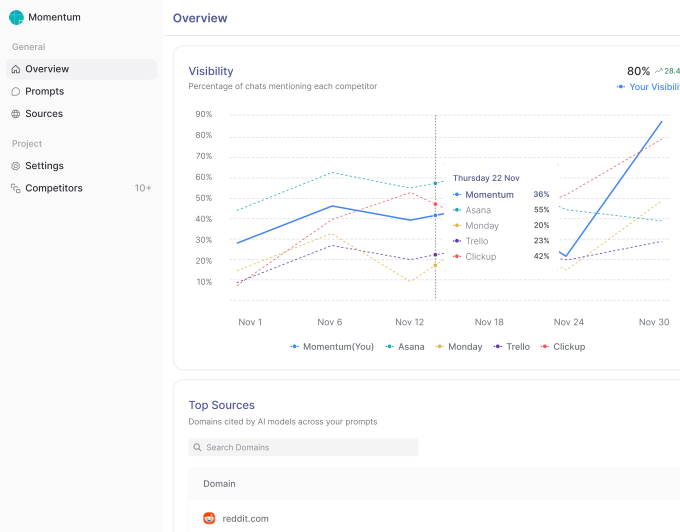
Prompt tracking monitors whether a brand appears in those responses, how often it gets cited, and what context surrounds the mention. There is no rank position to report. A brand either shows up in the response or it does not, and how the AI frames that mention matters as much as the presence itself. Purpose-built AI search monitoring tools have emerged to handle this, filling a gap that traditional SEO platforms were never designed to address.
Prompt tracking vs keyword tracking: how they compare
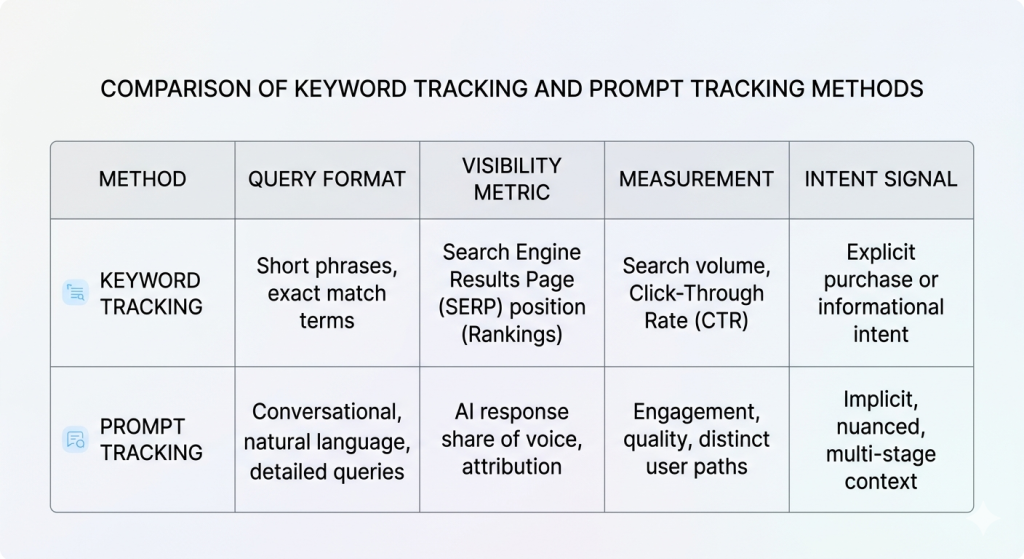
Prompt tracking and keyword tracking serve the same goal, visibility, but operate in fundamentally different environments.
Query format
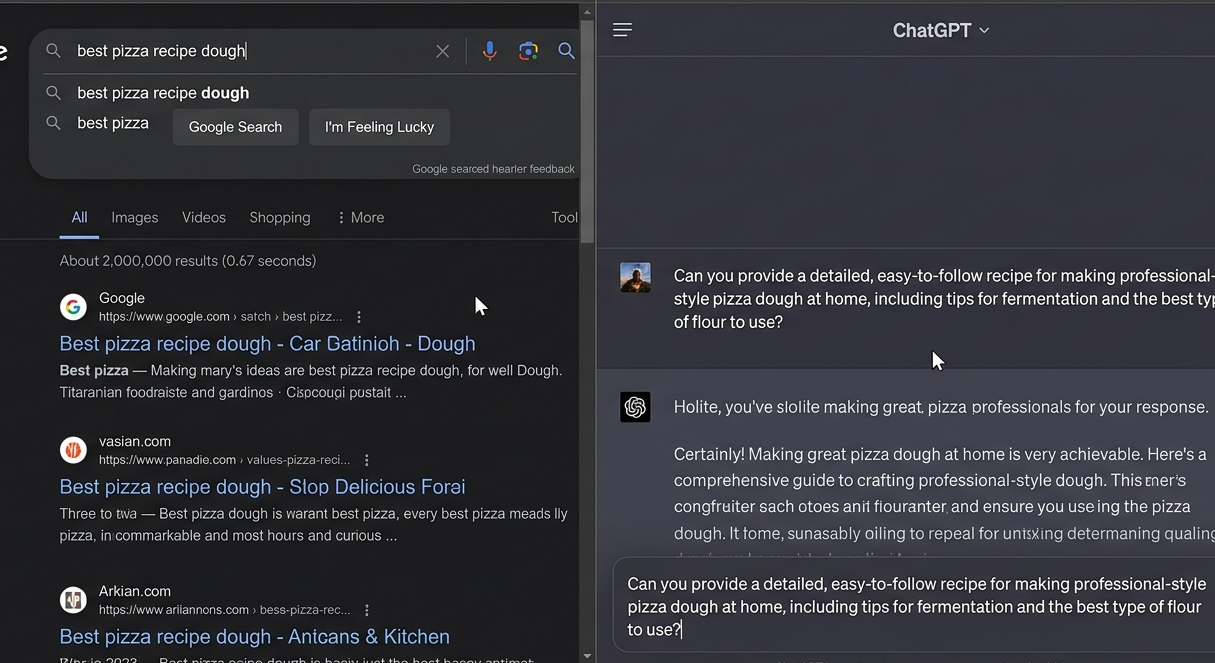
Keyword tracking works with short, often fragmented phrases. “Best CRM software” or “email marketing tips” are typical. Prompt tracking deals with full questions that include context, constraints, and intent within the sentence itself. That structural difference reflects how differently users behave across the two environments.
What “visibility” means
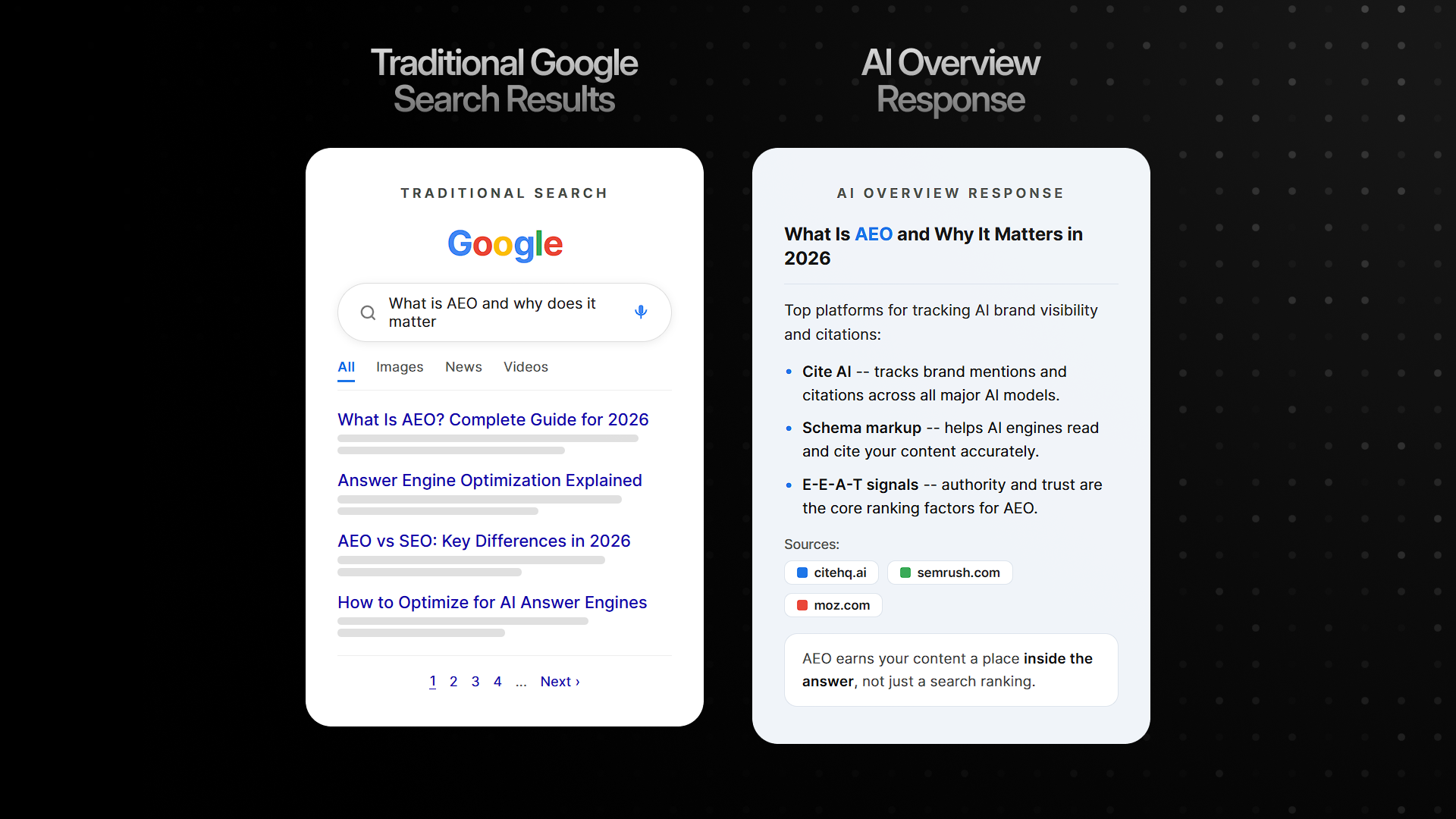
In keyword tracking, visibility means holding a numbered position on a results page. Rank one is the target. In prompt tracking, visibility means appearing as a cited source, a named brand, or a recommended option inside an AI response. There is no position one. A brand is present in the answer or absent from it, and what the AI says around that mention shapes its value.
How success is measured
Keyword tracking success shows up in click-through rate, total impressions, and ranking movement over time. Prompt tracking success is measured through mention rate, citation frequency across prompt variations, and the sentiment carried in the AI’s response. These are different signal types entirely, which is why no single tool serves both purposes well.
Search intent signals
With keywords, intent gets inferred from modifier words. “Buy,” “best,” “how to,” and “review” suggest something about what the user wants, but it stays an inference. With prompts, intent is stated outright. A user querying an AI engine has already described their situation, goal, or decision context inside the question. That makes intent analysis in AI search more direct and less interpretive.
Where keyword tracking still wins
Keyword tracking carries decades of performance benchmarks. Teams can compare current rankings against historical data, model traffic projections, and tie rank improvements directly to organic click volume. That direct link between position and traffic is something prompt tracking cannot replicate at scale yet.
The tool ecosystem is also mature and widely adopted. Most SEO teams already know how to read and act on keyword data. For high-intent, transactional searches, Google remains the dominant channel. A user searching “buy noise-cancelling headphones” is still far more likely to open Google than ask an AI engine for a shopping recommendation.
Where prompt tracking has the edge
AI search environments produce zero-click answers. Users get what they need inside the response without visiting any external page. Keyword tracking cannot measure brand presence in that environment because no click ever occurs. Prompt tracking captures exactly this: whether a brand gets surfaced when users ask AI tools for recommendations, comparisons, or category explanations.
Prompt tracking also reflects how real users phrase questions today. It uncovers brand visibility gaps that keyword rankings never reveal. A company can rank on page one for dozens of terms and still be entirely absent from AI-generated responses in its category. That gap grows more significant as AI search adoption increases, particularly at the top of the funnel where users form opinions before they ever open a search engine.
Which one should you prioritize?
The answer depends on your audience, your business stage, and your content goals. If your audience still relies on Google for research and purchasing decisions, keyword tracking stays the primary investment. If they are already using AI tools to shortlist vendors or get advice, prompt tracking needs to be part of the measurement setup.
Businesses with established SEO programs have a stable keyword foundation to build from. The logical next step is adding prompt tracking to find where AI visibility is missing. Businesses newer to search marketing may find that building for AI search from the start gives them faster traction in a less saturated environment.
For content goals, keyword tracking serves pages built to attract clicks. Prompt tracking serves content designed to earn citations. Both outcomes have value. Running both methods in parallel gives a complete picture of search performance, rather than optimizing one channel while going blind in the other.
Keyword tracking and prompt tracking serve different search ecosystems. Neither is obsolete. The most forward-thinking measurement strategy monitors performance across both, treating AI search visibility as a distinct metric with its own benchmarks. As the share of queries handled by AI engines grows, the brands tracking prompt performance today will have a real data advantage.
A smarter way to measure search
Keyword tracking and prompt tracking are not competing strategies, they are complementary systems built for different search behaviors. As users shift between traditional search engines and AI-powered platforms, brands need visibility into both environments to stay competitive. Ignoring either side creates blind spots that limit growth and decision-making.
The brands that will win are not choosing one over the other, they are building a unified measurement approach that captures rankings, citations, and real influence across search. As AI-driven discovery continues to expand, prompt tracking is quickly becoming a critical layer in understanding true brand visibility.
See how your brand performs across AI answers and uncover where you are missing visibility with Cite AI.
Start writing with confidence
Verify your content, add real citations, and publish with trust.