
Blog
Complete Guide
The Complete Guide to AI Visibility: What It Is and How to Close the Gaps

Your brand might rank on page one of Google and still be invisible where millions of buyers are now asking their questions — inside ChatGPT, Gemini, Perplexity, and Google AI Overviews. That gap between traditional search presence and AI-generated answer presence is what AI visibility measures, and it's widening fast.
Generative AI platforms are no longer a novelty channel. They're becoming the first stop for product research, vendor comparison, and buying decisions. When an AI assistant recommends a tool, names a brand, or cites a source, that moment shapes perception before a user ever visits a website.
This guide covers the full picture: what AI visibility is, how it differs from conventional search, where brands most commonly lose ground, and how to build a tracking and optimization system that closes those gaps systematically — not by guessing, but by following the data.
What Is AI Visibility?
AI visibility is the measure of how frequently, accurately, and favorably a brand appears inside answers generated by AI engines — including ChatGPT, Google Gemini, Perplexity, and Google AI Overviews — when users ask questions relevant to that brand's category. Unlike traditional search visibility, which tracks a website's ranking position on a results page, AI visibility tracks presence and framing inside the answer itself: whether the brand is named, cited as a source, recommended over competitors, or excluded entirely. It is quantified through metrics like Share of Voice (the percentage of relevant AI-generated responses that include the brand) and citation frequency (how often the brand's own URLs are referenced as sources when an AI constructs its answer).
Why AI Visibility Is a Distinct Discipline from Traditional SEO
Traditional search optimization targets a position on a results page. A brand ranks at position three, a user clicks, and the visit is logged. AI-generated answers work differently — the engine synthesizes a response from multiple sources and presents a single, confident recommendation. The user may never see a list of links at all.
This shift means that ranking well in Google's conventional index does not automatically translate into presence inside AI-generated answers. An AI engine evaluating 'best project management tools for startups' draws on its training data, live retrieval, and source credibility signals that have little to do with a page's traditional PageRank. A brand can be invisible in generative AI answers while appearing healthy in every legacy rank-tracking dashboard.
Answer Engine Optimization (AEO) and Generative Engine Optimization (GEO) are the disciplines that fill this gap. They focus on the signals AI models weight when constructing answers — source authority, content structure, topic coverage, and citation frequency — rather than click-through rates and backlink profiles.
- AI engines synthesize answers; they do not just rank links — presence requires a different kind of optimization signal
- Share of Voice in AI answers can diverge sharply from SERP ranking position
- Google AI Overviews, ChatGPT search, and Perplexity each weight sources differently — unified tracking is essential
- AEO and GEO treat content structure, citation-worthiness, and topic authority as primary levers
- Traffic can fall significantly while conventional rank-tracking dashboards show no change — the gap is AI-driven
What Is AI Visibility? The Foundation Every Team Needs
AI visibility is not a single number — it is a set of layered signals that together reveal how an AI engine perceives, frames, and recommends a brand. The three core layers are prompt-level visibility (does the brand appear when someone asks a relevant question?), source-level citation (is the brand's own content being pulled as a reference?), and sentiment framing (is the brand described accurately, favorably, or with caveats?).
Each layer requires a separate measurement approach. Prompt-level visibility is captured by running tracked discovery queries through AI platforms and recording whether the brand is named. Source citation is captured by identifying which URLs the AI engine references in constructing its answer — a fundamentally different signal from a brand mention. Sentiment analysis looks at the language used around the brand when it does appear.
Together, these three layers answer the question every marketing team needs to answer: not just 'are we showing up?' but 'why are we showing up — or why aren't we?' That granularity is what separates a real AI visibility program from a weekly manual spot-check of ChatGPT.
- Prompt-level visibility: does the brand appear in response to high-intent discovery queries?
- Citation sourcing: which of the brand's specific pages are referenced as AI sources?
- Sentiment framing: is the brand described accurately and favorably inside the generated answer?
- Share of Voice: what percentage of tracked AI responses include the brand versus named competitors?
- Fan-out sub-query visibility: is the brand present in the internal sub-questions the AI generates before answering?
- Competitor benchmarking: which competitor domains are winning the citations your brand is missing?
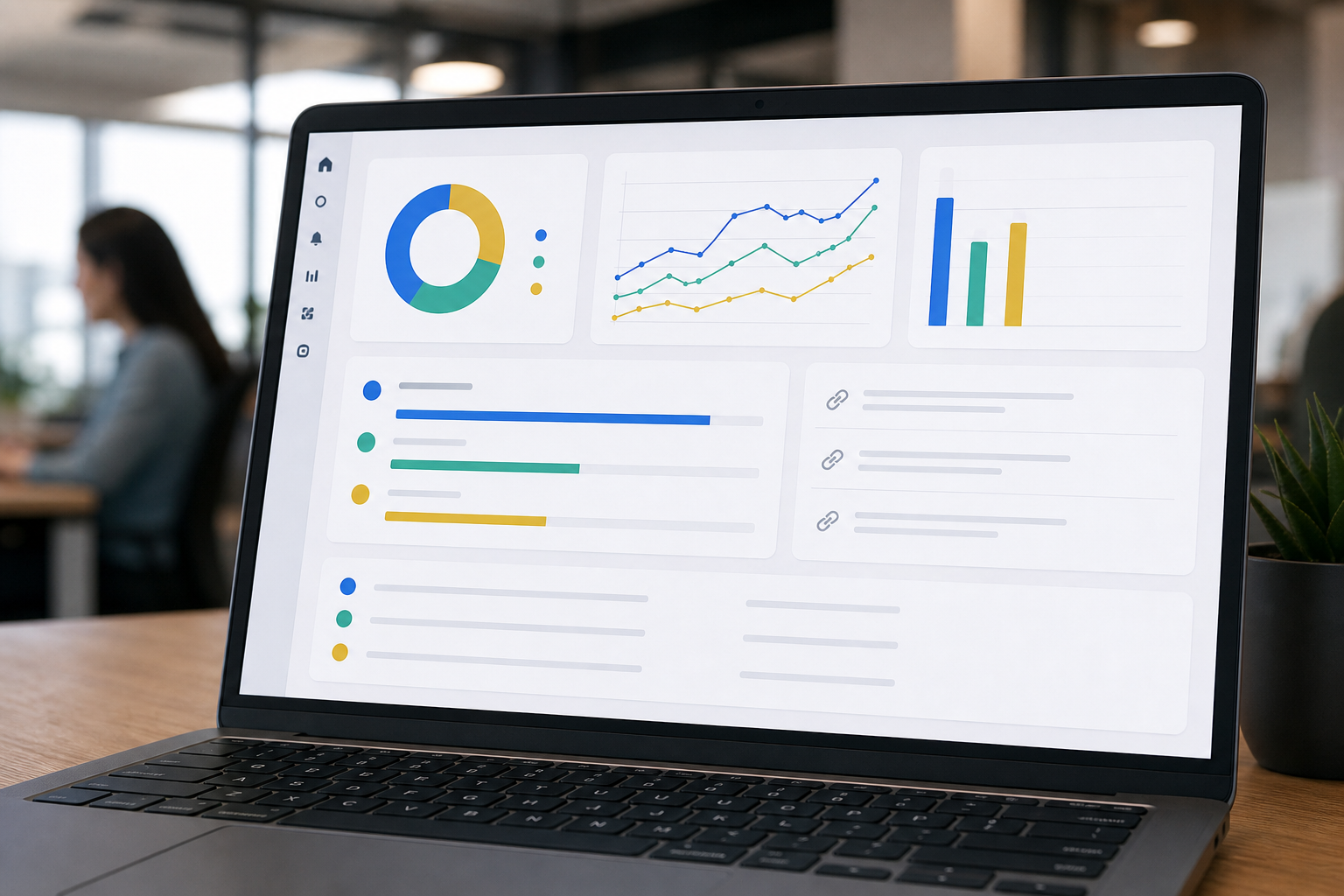
Three Core Layers of How AI Engines Decide What to Cite
When a user types a query into a generative AI assistant, the engine does not simply retrieve the top-ranked web page. It internally generates a set of related sub-queries — often called fan-out queries — to build a richer answer. A brand that ranks for the surface-level prompt may be entirely absent from the sub-queries actually driving the engine's final response.
After the fan-out query stage, the AI selects specific sources to cite. This is where source classification becomes critical. A citation from a brand's own domain signals direct authority. A citation from an independent editorial publication signals earned credibility. A citation from a community forum or review platform signals social proof. These carry different weights and require different optimization responses.
Finally, before a page can be cited at all, it must be crawled by AI-specific bots — GPTBot, ClaudeBot, Google-Extended, and others. If an AI crawler has never visited a page, that page cannot appear as a citation source regardless of how well-optimized its content is. Diagnosing the crawl layer is often the first step in closing an AI visibility gap.
- Fan-out sub-queries: the hidden internal questions an AI generates before composing its final answer
- Source selection: the AI chooses specific URLs as references — these are trackable and classifiable
- AI crawler access: GPTBot, ClaudeBot, and Google-Extended must visit a page before it can be cited
- Domain type weighting: owned, editorial, competitor, and community sources carry different authority signals
- Prompt refresh cycles: AI answers evolve daily — a one-time check is not a visibility program
Five Common AI Visibility Gaps — and What Causes Them
The most common AI visibility gap is the crawl-citation disconnect: a brand's pages are indexed by Google but have never been visited by an AI-specific crawler. Without a crawl log filtered for AI bots, this failure is completely invisible. The fix is technical — ensure AI crawlers are permitted in robots.txt and that high-value pages are structured for AI retrieval.
The second frequent gap is prompt coverage. Most brands, when they first audit their AI presence, discover they've been checking only two or three obvious branded queries. Generative AI assistants field thousands of unbranded comparison and category queries — 'which task is a generative AI task?', 'best AI-powered research assistants for enterprise teams' — where competitors are named and the brand is absent entirely.
A third gap is source dependency: a brand appears in AI answers, but only because a third-party review site or forum is being cited. When that third-party source changes its content, the brand's AI visibility shifts — and the brand has no early warning. Classifying citation sources by type reveals this fragile dependency before it becomes a traffic event.
- AI crawl gap: high-value pages are never visited by GPTBot, ClaudeBot, or Google-Extended
- Prompt coverage gap: tracking only branded queries while unbranded comparison prompts drive most AI discovery
- Source dependency gap: AI visibility is built on third-party citations the brand doesn't control
- Content structure gap: pages lack the direct, answer-formatted content AI engines favor as citation material
- Competitor citation gap: competitor domains are winning citations on prompts where the brand should rank
- Sentiment framing gap: the brand appears in AI answers but is described with outdated or inaccurate information
How to Build an AI Visibility Tracking Program from Scratch
Start with prompt architecture. Identify the discovery queries your ideal buyer actually types into conversational AI apps — not just branded queries, but category, comparison, and problem-aware questions. A SaaS brand entering this for the first time might track 50–200 prompts across three to five topic clusters. Platforms like CiteHQ AI (citehq.ai), which runs 50,000+ prompts daily across major AI platforms, use AI-suggested prompt libraries that teams can review and approve, cutting setup time significantly.
Layer in competitor tracking from the start. Every tracked prompt should also return competitor visibility data — which named rivals appear, at what position, and with what source citations. This turns prompt tracking from a self-referential audit into a true market-level benchmark. The goal is not just to know your own Share of Voice, but to know exactly which competitor domains are winning the citations you should be earning.
Establish a weekly reporting cadence. AI answers evolve as models are updated and as the web content they draw from changes. A snapshot taken once a month will miss these shifts. A weekly cadence tied to consistent tracked prompts gives teams a trend line — rising or falling Share of Voice, new competitor citations, changes in source classification — that makes AI visibility a reportable, boardroom-ready metric.
- Build a prompt library covering branded, unbranded, category, and comparison query types
- Add named competitors to every tracked prompt set for side-by-side Share of Voice comparison
- Audit AI crawler logs to confirm GPTBot and similar agents are accessing high-priority pages
- Classify citation sources by type (owned, competitor, editorial, community) to identify dependency risks
- Refresh tracked prompts on a consistent 24-hour cycle — AI answers are not static
- Report Share of Voice and citation frequency as weekly KPIs alongside traditional traffic metrics
AI Visibility for E-Commerce: Shopping Carousels and Product-Level Tracking
For retail and e-commerce brands, AI visibility has a distinct product-level layer that most generalist AEO tools don't address separately. Generative AI engines — particularly Google AI Overviews and Gemini — increasingly surface shopping carousels directly inside AI-generated answers. A product recommendation in this context is a distinct visibility event from a standard text citation.
The relevant metrics for this layer are win rate (how often a product appears when it's eligible to be recommended), average position within the carousel, and appearance frequency over time. These map more directly to revenue outcomes than Share of Voice in a text-based answer. A brand with 60% carousel win rate on its hero product category is generating measurable AI-driven discovery.
Shopping demand and attribute insights add another dimension: which product attributes — price, ratings, features, sustainability claims — does the AI engine most frequently reference when comparing products in a category? This shapes not just what to track, but what to emphasize in product listings and content to improve AI-generated recommendation frequency.
- AI shopping carousels are a distinct visibility layer from standard text-based AI Overview citations
- Win rate measures how often a product appears when eligible to be recommended in AI results
- Average carousel position is a trackable metric — first position carries materially different visibility than fifth
- AI engines weigh specific product attributes (price, ratings, features) when generating comparison answers
- Shopping visibility should be tracked separately from brand-level Share of Voice for retail teams
- Appearance frequency trends reveal whether AI recommendation presence is growing or eroding over time
Four Optimization Levers That Improve AI Visibility Over Time
Content structure is the highest-leverage owned optimization lever. AI engines favor pages that answer questions directly, use clear heading hierarchies, and include specific, citable claims with supporting data. A blog post written primarily for keyword density performs poorly as an AI citation source. A structured resource written to answer a defined question performs well — and is more likely to be pulled as a reference by generative AI assistants.
Earned media and editorial citations are the second major lever — and one that many brands underestimate. When a credible third-party publication cites a brand's research, data, or product, that citation can become an AI source in its own right. Building a consistent earned media presence in category-relevant publications strengthens AI visibility independent of what the brand publishes on its own domain.
Technical AI crawl access is the third lever, and the most often overlooked. Confirming that robots.txt permits GPTBot, Google-Extended, ClaudeBot, and other known AI agents is a prerequisite for any citation strategy. Finally, prompt coverage — systematically identifying and tracking the full range of queries that lead to AI-generated answers in a category — ensures optimization efforts are directed at the queries actually driving AI-mediated discovery, not just the obvious branded terms.
- Content structure: write pages to answer specific questions directly, with clear headings and citable data
- Earned media: build editorial citations in category publications — these become independent AI sources
- AI crawler access: confirm robots.txt permits GPTBot, ClaudeBot, and Google-Extended on key pages
- Prompt coverage: track unbranded, comparison, and problem-aware queries, not just branded terms
- Source classification review: identify over-reliance on community or third-party citations and strengthen owned content
- Citation gap analysis: surface competitor domains winning citations on your tracked prompts and reverse-engineer their content
What to Look for in an AI Visibility Tool
The core capability any AI visibility tool must provide is prompt-level tracking across multiple AI engines — not a single platform snapshot, but consistent, repeatable data from ChatGPT, Gemini, Perplexity, and Google AI Overviews in one place. Without multi-engine tracking, a brand can't distinguish whether an AI visibility gap is platform-specific or universal.
Source attribution — knowing which specific URLs and domains are cited in an AI-generated answer, not just whether the brand was mentioned — is the feature that separates visibility tools from mention-counting tools. A brand mention and a citation are fundamentally different signals. Mention-counting tells you that the brand's name appeared. Citation tracking tells you which page earned the AI's reference, and whether that page is owned, earned, or competitor-controlled.
For teams managing multiple brands or agency accounts, workspace architecture matters. The ability to organize separate client prompt libraries, competitor sets, and reporting dashboards under one login — rather than running disconnected manual checks — determines whether AI visibility reporting is sustainable at scale. Look for tools that also surface fan-out query data, because surface-level prompt visibility alone will miss a significant share of where AI engines actually source their answers.
- Multi-engine tracking: coverage across ChatGPT, Gemini, Perplexity, and Google AI Overviews simultaneously
- Citation source attribution: URL-level identification of which pages AI engines reference, not just brand name mentions
- Source classification: categorization of cited domains as owned, competitor, editorial, or community
- Fan-out query visibility: surfacing the internal sub-queries AI generates before composing its final answer
- Competitor benchmarking: side-by-side Share of Voice comparison on the same tracked prompt set
- Agency workspace: multi-client account management with separated prompt libraries and reporting
| Capability | Traditional SEO Tools | Generalist AEO Tools | CiteHQ AI | Manual Spot-Checking |
|---|---|---|---|---|
| Multi-engine AI tracking (ChatGPT, Gemini, Perplexity, AI Overviews) | No | Partial | Yes — all four platforms | Inconsistent |
| Citation source attribution (URL-level) | No | Limited | Yes — with domain type classification | No |
| Fan-out sub-query visibility | No | Rarely | Yes | No |
| Competitor Share of Voice benchmarking | Partial (SERP only) | Basic | Yes — per-prompt comparison | No |
| AI shopping carousel tracking | No | No | Yes — win rate, position, frequency | No |
| Prompt refresh cadence | N/A | Varies | Every 24 hours | Ad hoc |
| Agency multi-brand workspace | Varies | Limited | Yes — dedicated agency tier | No |
Frequently Asked Questions
-
What is AI visibility?
AI visibility measures how frequently, accurately, and favorably a brand appears inside AI-generated answers across platforms like ChatGPT, Gemini, Perplexity, and Google AI Overviews. It tracks presence inside the answer itself — whether a brand is named, cited as a source, or recommended over competitors — rather than measuring a ranking position on a traditional search results page. Share of Voice and citation frequency are the primary metrics used to quantify it. -
How to improve visibility in AI results?
Improving AI visibility requires action across three layers: content structure (writing pages that answer specific questions directly with citable data), earned media (building editorial citations in category-relevant publications that AI engines use as sources), and technical crawl access (ensuring AI bots like GPTBot and Google-Extended can access high-value pages). Tracking competitor citation sources on the same prompts you're targeting reveals the most actionable content gaps to close first. -
How do I see my AI visibility — where to find my brand in AI model responses?
The most reliable method is a dedicated AI visibility tracking platform that runs your chosen prompts through ChatGPT, Gemini, Perplexity, and Google AI Overviews daily and records whether your brand appears, at what position, and which sources are cited. Manual spot-checking — typing queries directly into AI tools — gives a snapshot but is inconsistent and doesn't track changes over time. A structured tool provides a repeatable Share of Voice metric you can report on week over week. -
What is the best AI visibility tool?
The best AI visibility tool for a team depends on its specific needs: multi-engine coverage, citation source attribution, fan-out query tracking, or shopping carousel analytics. CiteHQ AI is built for marketing and growth teams that need all four layers in one platform, with 50,000+ prompts tracked daily and an agency workspace for multi-client reporting. Other tools in this category include Profound, Peec, and AthenaHQ, each with different positioning and feature depth. -
How to identify AI visibility gaps in content?
Start by auditing which of your pages are actually being cited as sources in AI-generated answers — not just which pages exist on your site. Then check AI crawler logs to confirm that GPTBot, ClaudeBot, and similar agents are visiting those pages. Map your tracked prompts against competitor citation sources to find queries where rivals are named and you're absent. These three checks together reveal whether the gap is a crawl problem, a content structure problem, or a prompt coverage problem. -
What is Answer Engine Optimization (AEO) and how does it differ from SEO?
Answer Engine Optimization (AEO) is the practice of structuring content and earning citations so that a brand appears prominently inside AI-generated answers, not just on traditional search results pages. SEO focuses on ranking position within a link-based results list; AEO focuses on presence, framing, and citation frequency within synthesized answers. The signals AI engines weight — source credibility, content directness, citation patterns — overlap with but are distinct from conventional ranking signals. -
What is Generative Engine Optimization (GEO) and is it the same as AEO?
Generative Engine Optimization (GEO) and Answer Engine Optimization (AEO) describe overlapping but slightly different framings of the same discipline. GEO emphasizes optimizing for the generative AI systems (like LLMs) that produce answers, focusing on how training data, content authority, and retrieval signals shape model outputs. AEO emphasizes optimizing for the answer-delivery experience — being the source cited in the final response. In practice, most practitioners use both terms to describe the same strategic space. -
What is one major risk associated with generative AI models for brand visibility?
One major risk is that generative AI models can present outdated, inaccurate, or competitor-favoring information about a brand with confident, authoritative framing — and users have no easy way to verify it. A brand can be actively misrepresented in AI-generated answers without any notification. Without structured AI visibility tracking that monitors sentiment and source attribution on a recurring basis, these framing problems compound silently over weeks before anyone notices the impact on discovery and traffic.