The Source Type Framework: Understanding Where AI Gets Information From
Share this Article:


Buyers now find brands through AI-generated answers. They ask ChatGPT for the best tool in a category. They check Perplexity before a purchase. They read a Google AI Overview and stop there. Whatever answer they get shapes how they see your brand, and most marketers have no idea which sources fed that answer.
When a model recommends a competitor and leaves you out, the reason sits inside the AI sources it pulled from. This framework maps those sources, measures their influence, and turns a black box into something you can work with.
Why Knowing Your AI Sources Matters Now
Search moved from ten blue links to one synthesized answer. People read the response and stop looking. That changes what visibility means for your brand. ChatGPT and Gemini build these answers from two things: the data they trained on and the live content they retrieve when someone asks. Both draw from specific sources, and those sources decide whether your brand shows up at all.
Ranking on Google no longer earns you a citation in an AI answer. A page can rank #1 and still get skipped when the model writes its response. That gap between traditional ranking and AI answer citations is where brands quietly lose ground. When a rival gets cited in a comparison answer and you don’t, you lose consideration the second a buyer decides.
The Core Problem: We Can’t See What AI Reads
AI answers feel like a black box. A response appears; it sounds sure of itself, and there is no clear trail back to where each claim came from. Marketers keep asking the same things. Where does my brand show up? Why is a competitor cited instead of us? Which sources shape the answer?
Traditional SEO tools do not answer any of that. They track keyword positions and backlinks, not whether a model names your brand or which page it referenced. So, teams guess. And guessing means spending budget on content and PR that may never touch the answers your buyers read. Tracking replaces that guesswork with source-level data you can plan around.
The Source Type Framework: Five Categories of AI Sources
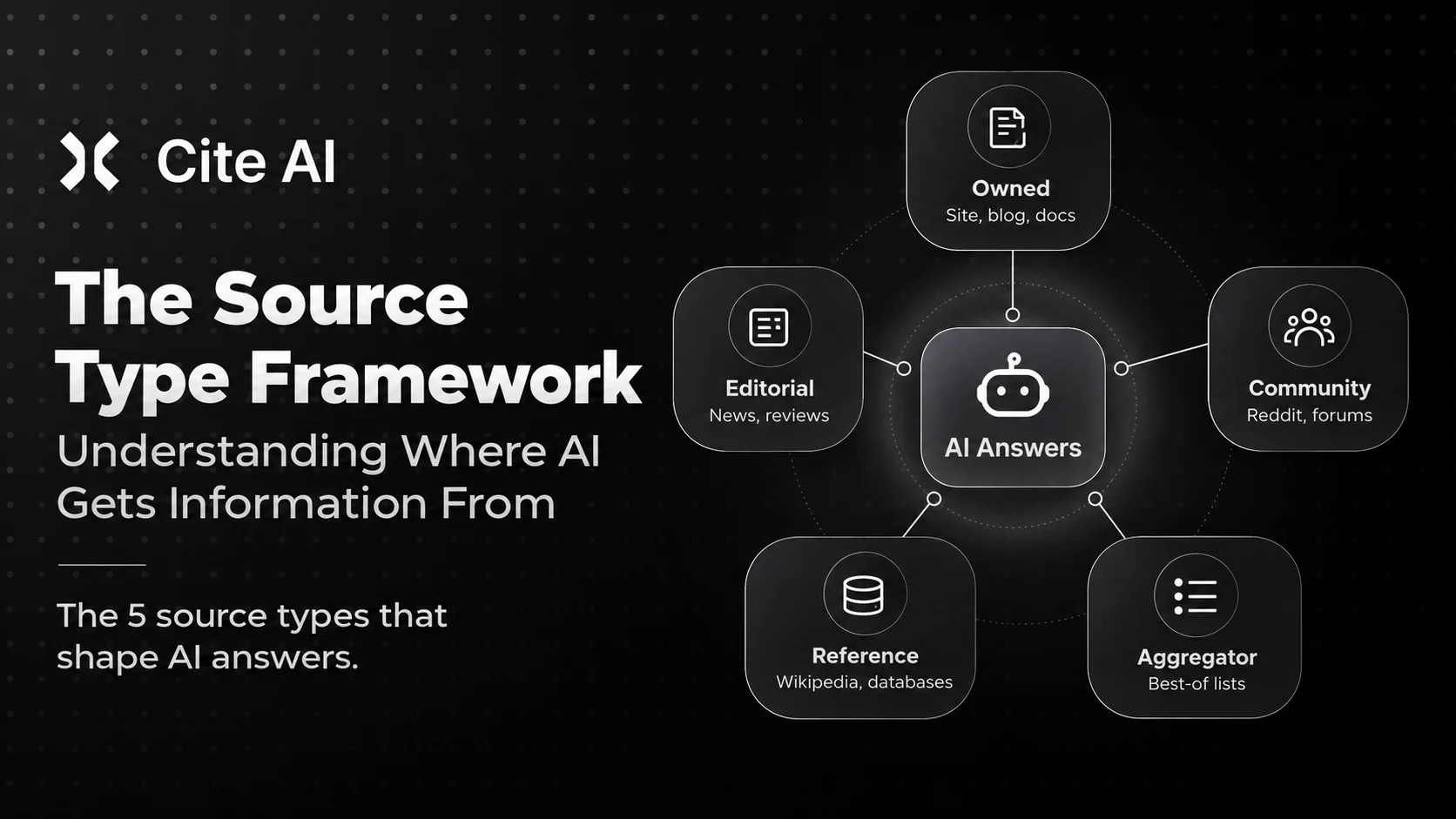
AI engines pull from a predictable set of source types. Grouping them into five categories gives us a map of where a brand does and doesn’t appear.
1. Owned Sources
Your website, blog, documentation, and product pages fall here. You fully control this content, so it’s the first place to fix accuracy and structure. Clean, well-organized owned content gives models better material to cite when they describe you.
2. Editorial and Media Sources
News outlets, industry publications, and expert reviews carry weight because they are outside voices. AI models read editorial mentions as authority signals. A citation in a respected publication often shapes answers more than a claim you make about yourself.
3. Community and UGC Sources
Reddit, Quora, forums, and review sites now carry real weight in AI answers. Models pull from these because they read as honest, unfiltered opinion. LLM citation tracking shows these community sources shaping product and comparison responses all the time.
4. Reference and Structured Sources
Wikipedia, databases, and comparison directories hand models clean, structured facts. Structured data helps engines confirm details and lowers the chance they describe your brand wrong. Presence here supports accuracy across many prompts at once.
5. Aggregator and Listicle Sources
“Best of” roundups, category listings, and buyer guides feed comparison answers directly. When a buyer asks for the top options in a category, models lean on these aggregators. If it’s missing from the list, it’s missing from the answer. Steady citation analysis across these AI sources shows which lists matter most.
How to Run Citation Analysis on Your Brand
Start by mapping which of the five source types cite your brand across ChatGPT, Gemini, and AI Overviews. This shows where you hold presence and where you are absent. Then run the same prompts through a competitor lens. When a rival shows up in editorial or aggregator sources, and you don’t, that gap becomes an obvious priority.
Next, find the high-influence sources, the ones models cite again and again for your category. Not every source carries equal weight, so citation analysis lets you focus on the few that move answers. Turn that into a plan. Build owned content for topics where you go missing, and target the editorial and community sources that shape what your buyers read. LLM citation tracking keeps the plan tied to what AI engines pull today, not last quarter.
How We Track AI Sources With Cite AI
Cite AI monitors brand mentions and citations across ChatGPT, Gemini, and Google AI Overviews, so you see where your brand lands in real answers. Our source influence reporting shows which sources shape those answers, so you spend effort where it counts.
You also see competitor presence and share of voice side by side, which turns benchmarking into data instead of a hunch. Cite AI tracks over 50,000 prompts daily at accessible pricing built for real usage, so agencies and multi-brand teams get the same core AI search visibility workflow without an enterprise budget.
Look at our AI search visibility page, review the prompt tracking feature, and check the competitor benchmarking page to see how the pieces fit. For wider context, external research on AI search behavior and platform documentation on AI citations explain how these engines select and reference sources.
Turning Source Insights Into Action
Prioritize source types by measured influence, not gut feeling. If community sources shape most answers in your category, an earned placement there matters more than another owned blog post. Go after the sources AI trusts most, whether that is a review site, an industry publication, or a buyer guide.
Treat AI visibility as ongoing work. Answers shift as prompts change and platforms update how they retrieve content, so a one-time audit goes stale fast. Align content, PR, and SEO around shared citation goals, and review your source map on a set cadence. That rhythm keeps your brand present as the answers move.
FAQs
Which AI sources influence AI answers the most?
A mix of owned, editorial, community, and reference sources shapes most answers. Influence shifts by prompt and platform, so a source that dominates a comparison answer on Perplexity may carry less weight on Gemini. That is why measuring influence per prompt beats assuming it.
How is citation analysis different from traditional SEO tracking?
Traditional SEO tracking measures keyword rankings and links. Citation analysis measures whether your brand appears inside AI-generated answers and which sources drove that mention. It looks at presence in the answer itself, not position on a results page.
Can we improve which sources AI cites for our brand?
Yes. Build presence across the high-influence source types that shape answers in your category, from owned content to editorial and community placements. Pair that with ongoing LLM citation tracking so you can see whether the work changes the answers over time.
The Source Type Framework gives us a map for AI visibility: five categories that show where answers come from and where our brand fits. Knowing our sources turns guessing into a measurable, improvable strategy.
Start tracking your AI sources and citations with Cite AI.
Start writing with confidence
Verify your content, add real citations, and publish with trust.