Why AI Mentions Your Competitor Instead of Your Brand?
Share this Article:


Buyers open ChatGPT and Gemini before they open Google now. They ask which tool solves their problem, which brand earns the price, and which option teams trust. The answer builds their shortlist before they visit a single website.
When that answer names a competitor and skips you, it stings. Your product is better. Your reviews are stronger. Your positioning is sharper. And the model still points somewhere else. Here is the part worth holding onto: this gap is measurable, and once you can see it, you can close it with the right AI brand visibility tool.
The Real Problem: You’re Invisible Where Buyers Now Search
Discovery moved from a page of blue links to one AI-generated answer. People stopped scanning ten results and forming their own view. They read what the model says and act on it. That single shift changes what brand visibility in AI means for your team.
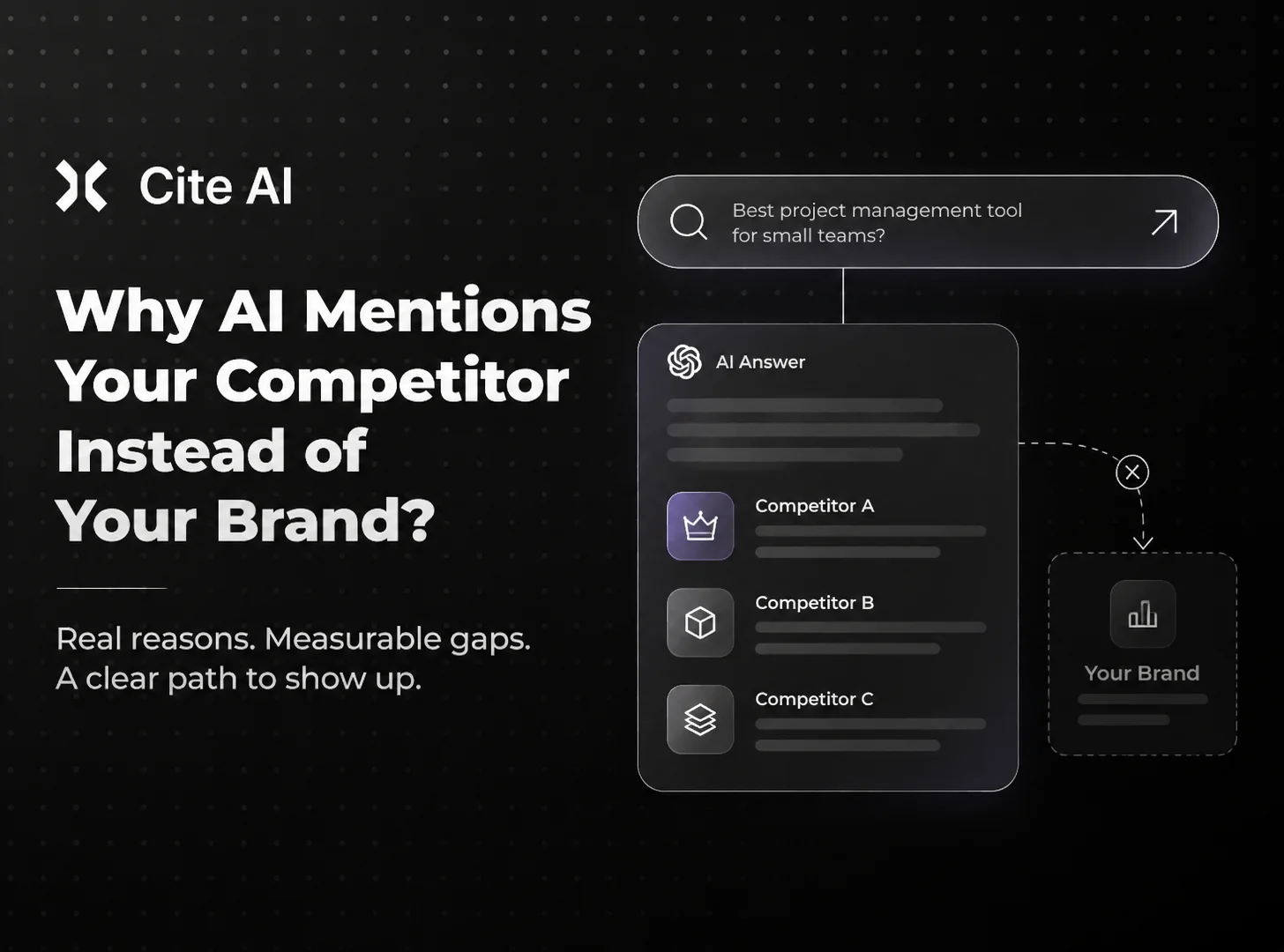
One recommendation shapes the whole shortlist. When ChatGPT names three tools for a task, those three enter the conversation, and the rest vanish. Miss that answer, and you miss consideration entirely. AI search optimization is the work of showing up in the moment the decision starts.
How AI Engines Decide Which Brands to Name
AI engines pull brand information from across the open web. They read your site, third-party reviews, industry roundups, forums, and news coverage, then build an answer from the sources they trust most. No single page controls the outcome. Your full web footprint does.
Some domains carry more weight than others. Established publications, well-structured review platforms, and sites with editorial reputation pull ahead when a model assembles a response. Third-party mentions, citations, and a consistent brand entity all reinforce credibility. When your name appears consistently across trusted sources, the model treats you as a real option.
Answers also shift by platform. ChatGPT, Gemini, and Google AI Overviews weigh sources differently, so you might dominate one and disappear from another. Tracking a single platform gives you half the story.
What Your Competitor Is Doing That You Aren’t
Your competitor holds a stronger presence in the sources AI trusts. They earn more mentions around the category topics and prompts that matter. They also publish answer-first content that models can quote with little effort.
Structured, Quotable Content
Quotable content puts the direct answer high on the page, before the long explanation. Clear headings, short definitions, and clean formatting make it easy for AI systems to lift a passage. Content buried under three paragraphs of setup rarely gets pulled.
Third-Party Citations and Authority Signals
Reviews, comparison roundups, and independent mentions reinforce your brand’s credibility. A consistent brand entity across the web- the same name, the same description, the same positioning- helps models connect every reference back to you. Competitors who invest here read as more authoritative to the engines.
The Solution: Diagnose the Gap With an AI Brand Visibility Tool
You cannot fix an answer you cannot see. An AI brand visibility tool shows where your brand appears across AI platforms and where it goes missing. That view turns a vague frustration into a clear list of problems to solve.
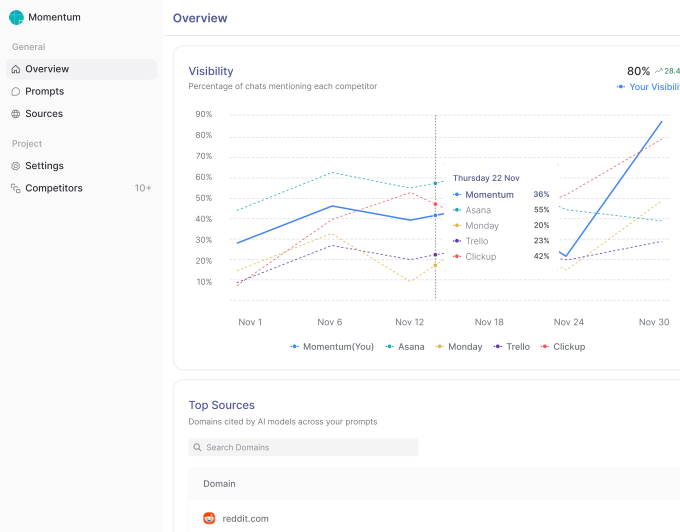
Cite AI tracks brand mentions, citations, and share of voice, so you know how often you show up, which sources drive those mentions, and how much of the category conversation you own.
Repeat prompt tracking catches answers as they move, because AI responses change with new content and platform updates. Cite AI monitors more than 50,000 prompts daily across ChatGPT, Gemini, and AI Overviews, at a price built for real usage. AI brand monitoring stays within reach for lean teams and agencies, not only enterprise budgets.
Run an AI Competitor Analysis to See the Real Gap
An AI competitor analysis benchmarks your share of voice against the brands beating you in AI answers. Instead of guessing why they win, you see the numbers side by side.
The analysis surfaces which prompts name your competitor and skip you, and which top-cited pages drive their AI presence. That distinction matters. Sometimes the gap is a content gap you fill with a better page. Other times it is a broader web-presence gap that needs earned mentions and third-party coverage.
Sorting one from the other tells you where to spend effort first, which sharpens both your SEO and PR planning.
A Practical Plan to Start Showing Up in AI Answers
Start with the content you already have. Move the direct answer to the top of each page, tighten your definitions, and format sections so a model can extract them cleanly.
Then build content around the real category prompts buyers ask. Use your prompt tracking data to find the questions where you are absent, and write pages that answer them head-on. Earn mentions on high-influence third-party sources by prioritizing the publications and review platforms AI already cites in your category. Align SEO, content, and PR so each effort feeds the others instead of working alone. This is how brand visibility in AI compounds over time.
Track Progress So Gains Don’t Slip Away
AI visibility is dynamic, not a one-time fix. Answers shift as competitors publish, platforms update, and prompt behavior changes. A page that earns a mention this month can lose it next month without you noticing.
Ongoing AI brand monitoring keeps you ahead of that drift. Watch your mentions and citations over time, catch the moment a competitor overtakes you on a key prompt, and report your AI share of voice to stakeholders with real numbers. Treating an AI brand visibility tool as a standing part of your reporting keeps hard-won gains from slipping away.
FAQs
Why does AI recommend my competitor instead of my brand?
Your competitor has a stronger presence in the sources AI trusts, earns more mentions around category topics, and publishes answer-first content that models can quote easily. Close those gaps, and your visibility improves.
Can I track my brand visibility across ChatGPT and Gemini?
Yes. An AI brand visibility tool like Cite AI monitors multiple platforms at once, including ChatGPT, Gemini, and AI Overviews, so you see how each engine describes and cites your brand.
How long does it take to improve AI visibility?
There is no fixed timeline. Progress ties to your content, your third-party citations, and shifting prompt behavior. Consistent effort and ongoing tracking move the needle faster than a single push. Industry coverage of GEO and Google’s own AI features documentation support this.
You cannot fix what you cannot measure in AI search. The reason a competitor gets named first stops being a mystery once you have the data in front of you. It comes down to sources, mentions, and quotable content, and every one of those sits within your control. The gap closes the moment you can see it clearly.
Explore Cite AI for better brand mentions today!
Start writing with confidence
Verify your content, add real citations, and publish with trust.