How to Use an AI Visibility Tool to Improve Marketing Strategy
Share this Article:


Your buyers no longer start with a search page. They ask ChatGPT which tool fixes their problem. They ask Perplexity to compare two vendors. They skim Google AI Overviews before clicking a single link. In each of those moments, an AI engine decides whether it names, cites, or leaves out your brand. That decision shapes who gets discovered, and most marketing teams have no way to watch it happen.
An AI visibility tool fixes that blind spot. It shows where your brand appears in AI-generated answers, how you stack up against competitors, and which sources tilt the answer one way or the other. This guide runs through the practical steps, from mapping prompts to acting on AI search insights, so you can measure and change how AI engines describe your brand.
What an AI Visibility Tool Actually Tracks
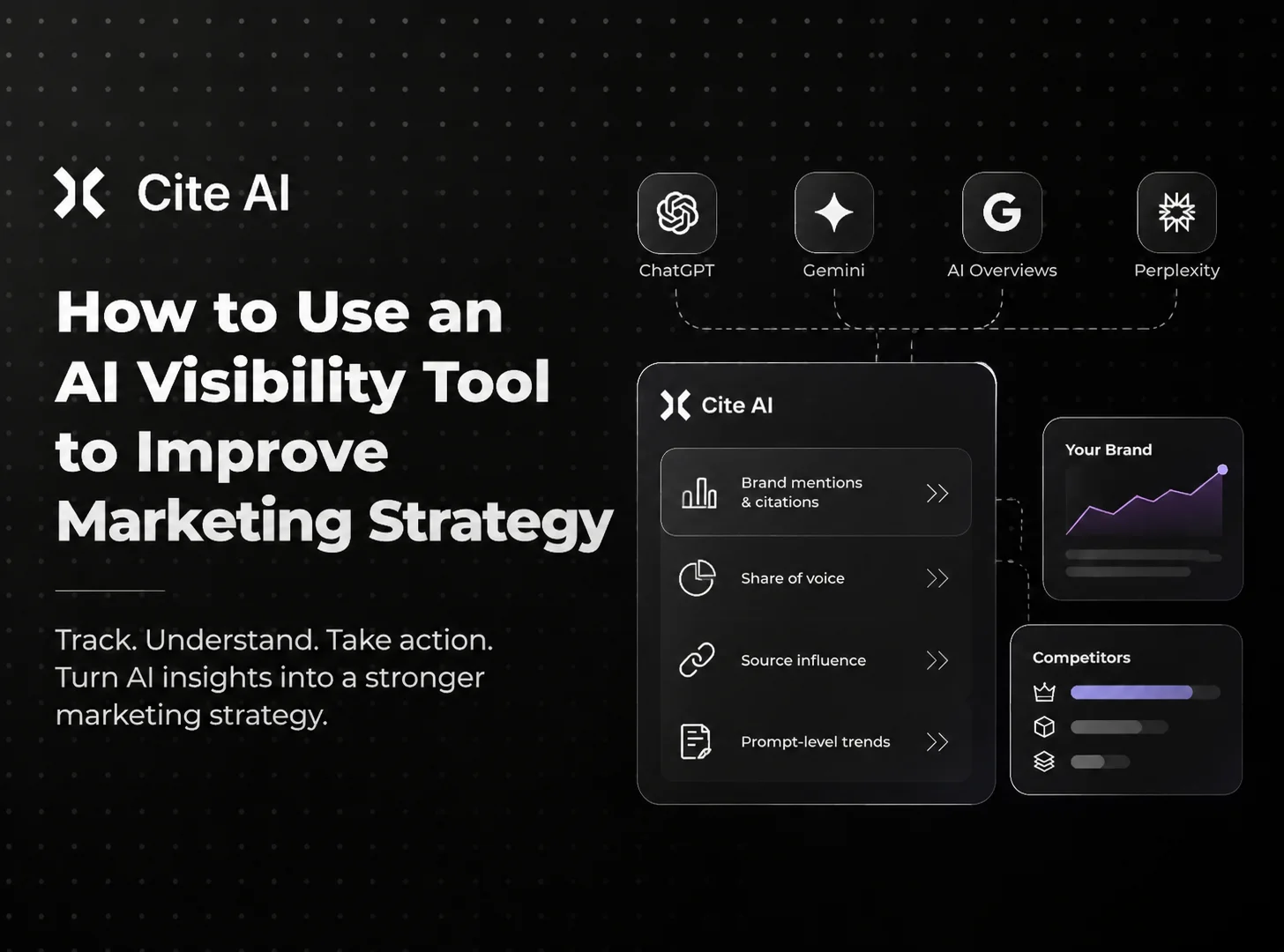
An AI visibility tool watches how AI engines talk about your brand. Four things matter here for marketing.
- Brand mentions and citations across AI-generated answers, so you know when and where you show up.
- Share of voice against competitors inside the same prompts, showing who owns the answer.
- Source influence, the third-party pages that shape how AI describes you.
- Prompt-level trends that reveal which questions surface your brand and which skip it.
Rank tracking measures blue-link positions. AI search monitoring measures something different: whether a model names you in its answer. A page can sit at position one on Google and still go uncited in ChatGPT. That gap is why brand tracking AI needs its own workflow, not a rank tracker with a new label.
Step 1: Map the Prompts Your Buyers Actually Use
Start with the questions your buyers ask, not the keywords in a volume report. AI prompts sound like real conversations, so your list should too.
- Awareness Prompts: “What tools help with AI search visibility?”
- Comparison Prompts: “Cite AI vs Profound for agencies.”
- Decision Prompts: “Best affordable AI visibility platform for multi-brand teams.”
Add category questions and competitor-named ones. A prompt like “what’s the best tool for X” might never register in keyword data, yet thousands of buyers type it every day. Tie each prompt to revenue with one question: if a competitor owns this answer and we don’t, does it lose us a deal? Those AI search insights point you to the prompts worth tracking.
Step 2: Track Your Brand Across AI Platforms
Every AI engine behaves differently. ChatGPT, Gemini, Google AI Overviews, and AI Mode pull from separate sources, and phrase answers their own way. A prompt that names you in Perplexity might drop you in Gemini. Check one platform, and you get a partial view.
Consistent AI search monitoring closes that gap. Cite AI tracks more than 50,000 prompts daily across these engines, so you see how each one treats your brand for the same question. Instead of asking ChatGPT once and guessing, you get repeatable data across every engine your buyers touch.
Step 3: Benchmark Competitor Presence
Your own visibility is half the story. The sharper signal is who shows up when you don’t.
Brand tracking AI flags when rivals get cited instead of you inside the same prompt. Read share of voice as a positioning signal: if a competitor owns 60 percent of answers for your core category question, that is a concrete, measurable disadvantage. Look for clusters of prompts where competitors dominate. Those clusters tell you where your AI marketing optimization work should start, because that is where buyers are hearing about someone else.
Step 4: Identify Which Sources Influence AI Answers
AI engines build answers from sources they trust. Once you know which pages shape your answers, you know where to work.
- Third-party pages that AI cites when describing your brand or category.
- Reviews and listicles that models lean on for comparisons and recommendations.
- Industry mentions that carry weight in a specific engine.
Turn source data into outreach priorities. If AI answers about your category keep pointing to one review platform or publication, that outlet becomes a PR target. Source influence turns a fuzzy “get more coverage” goal into a ranked list of pages worth earning.
Step 5: Turn Insights Into Marketing Actions
Data helps only when it changes what you publish. Every weak prompt is a content brief.
- Write answer-first content that leads with the direct answer, so AI engines can cite it cleanly. Our answer engine optimization guide covers the format.
- Strengthen entity clarity by stating what your brand is, who it serves, and how it compares, in plain terms across your site.
- Align PR and content around the prompts where you’re absent, aiming at the sources AI already trusts.
- Feed findings into SEO and content strategy, so AI visibility sharpens your briefs and calendar instead of sitting in a side report.
AI marketing optimization works best when it plugs into workflows you already run. Google’s guidance on helpful content makes the point that clear, useful pages perform better, and AI engines reward the same clarity.
Step 6: Monitor, Measure, and Repeat
AI visibility is not a one-time fix. Answers shift as prompts change, as platforms update, as competitors publish. A visibility check from last month tells you little about this week.
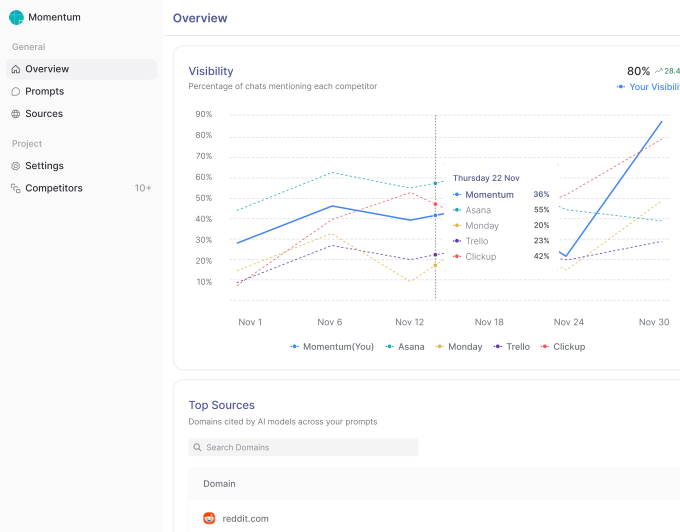
Track trends over time, not single snapshots. Watch whether your share of voice climbs after you publish, whether new sources start citing you, whether weak prompts improve. Then tie those gains to pipeline and brand goals. Research on generative AI search shows discovery moving toward AI answers, so ongoing AI search monitoring should be a standing line on the marketing dashboard, not a quarterly audit.
Why Cite AI Fits This Workflow
Cite AI is built for this loop. It runs the same core tracking as premium platforms, at accessible pricing made for real, ongoing usage rather than the odd spot check.
- Cost-efficient for agencies and multi-brand teams that track many brands at once.
- Visibility, citations, competitors, and prompts in one place, so you’re not stitching tools together.
- 50,000+ prompts tracked daily across ChatGPT, Gemini, and Google AI answers.
You get a full AI visibility tool that fits an agency budget.
FAQs
What is an AI visibility tool?
An AI visibility tool tracks how AI engines mention, cite, and describe your brand inside AI-generated answers. It shows where you appear across ChatGPT, Gemini, and Google AI results, giving marketers a clear read on AI search visibility.
How is AI visibility different from traditional SEO?
Traditional SEO measures where your pages rank in blue-link results. AI visibility measures whether an AI engine names and cites your brand inside its answer. A page can rank well and still go unmentioned, so the two need separate tracking.
How often should we track AI visibility?
Track it continuously. AI answers change with prompts, platform updates, and competitor activity, so ongoing monitoring shows real trends while one-time checks miss the movement that matters.
AI search is a real discovery channel your buyers already use, and it deserves measurement like any other. Map your prompts, track across platforms, benchmark competitors, act on source data, and run the loop again as answers shift.
Start tracking your brand’s AI visibility with Cite AI.
Start writing with confidence
Verify your content, add real citations, and publish with trust.