The AI Visibility Stack: Tools Every Marketing Team Needs in 2026
Share this Article:


Marketing teams are under real pressure from AI search right now.
Buyers are opening ChatGPT and Perplexity before they open Google. At the same time, most teams are either paying for tools they barely use or operating with zero visibility into how their brand appears inside AI-generated answers.
Here’s what a lean, affordable AI visibility stack actually looks like in 2026.
Why Marketing Teams Need an AI Visibility Stack Right Now
AI-generated answers now influence brand discovery before a click ever happens. A buyer types a question into ChatGPT, Gemini, Perplexity, or Google AI Mode and reads a response that shapes their opinion before they visit a single website. These are active discovery channels that run entirely outside traditional search rankings.
Marketing teams are feeling the pressure. Competitors who show up in AI answers earn recognition that never appears in any click-through report. The cost of ignoring AI search visibility is concrete: missed citations, invisible brand presence at the moments that matter, and elimination from conversations that quietly shift toward whoever the AI engine chooses to recommend.
What “AI Visibility” Actually Means for a Marketing Team

AI visibility is not about ranking on a page. It is about whether your brand gets mentioned and cited inside AI-generated responses, and what those responses say. For a marketing team, that breaks down into four measurable things: brand mentions and citations inside AI answers, share of voice across AI platforms compared to traditional search, which sources AI engines pull from when recommending brands in your category, and prompt performance, meaning how your brand appears when buyers ask the questions your audience is already asking.
These are not abstract metrics. They are the signals that tell you whether your brand exists in the AI discovery layer at all.
The Core Stack: 4 Tool Categories Every Marketing Team Needs
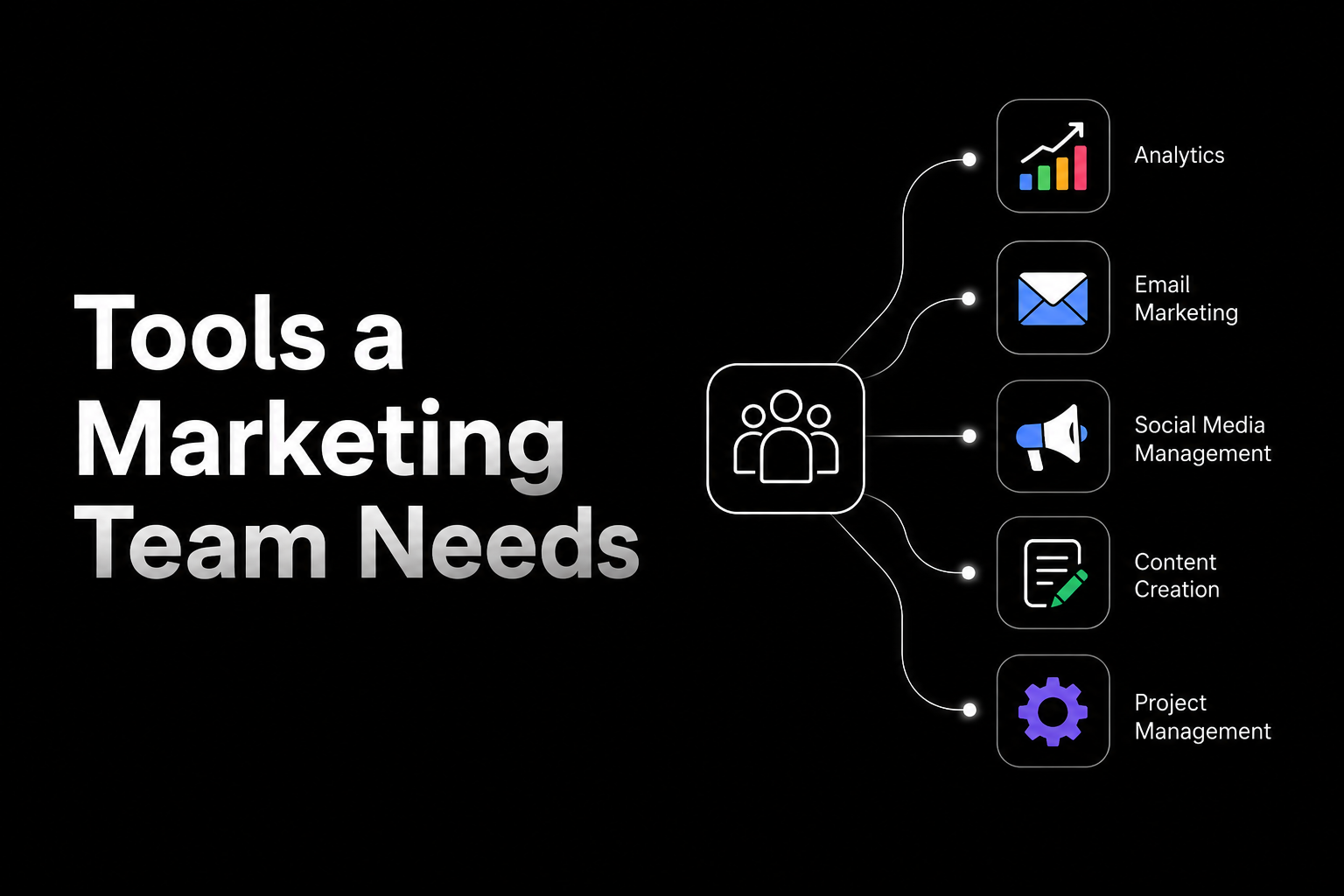
A lean AI visibility stack covers four jobs: tracking, content, monitoring, and competitive benchmarking. Here is how each one maps to the team’s workflow.
1. AI Search Visibility and Prompt Tracking
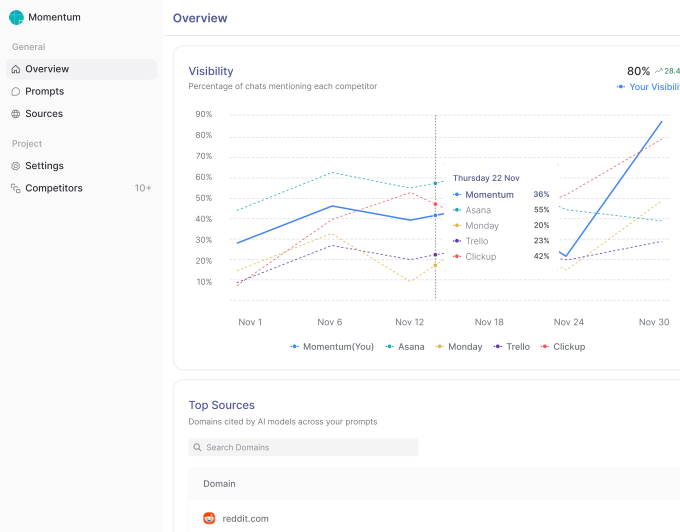
This is the foundation. Tracking brand mentions across ChatGPT, Gemini, Perplexity, and Google AI Overviews tells you where your brand appears and where it does not. Monitoring mentions surfaces your brand and turns abstract AI behavior into a concrete action list.
Cite AI is built for exactly this. It tracks 50,000+ prompts daily, covers the major AI platforms, and offers accessible plans that do not require an enterprise budget. For a small team that needs a real signal without any overhead, the AI search visibility platform fits both the workflow and the budget.
2. Content Optimization for AI Answers
AI engines cite content structured for extraction. Answer-first formatting, question-led headers, and strong source-authority signals: all increase the likelihood that an AI model will pull from your content rather than a competitor’s. Tools aligned with GEO and AEO best practices help small teams produce content that performs in AI-generated answers, not only in organic search.
3. Competitive Intelligence and Share of Voice
Knowing which competitors are being cited instead of you is one of the most actionable data points in AI search monitoring. Benchmarking brand presence across AI platforms over time surfaces trends that a single snapshot misses. Source influence tracking, which publications and pages AI engines trust in your category, turns competitive intelligence into a focused PR and content targeting strategy.
4. Traditional SEO and Web Presence Foundation
AI engines still pull from indexed, authoritative web content. Core SEO health is the foundation that feeds AI visibility, and neglecting it creates gaps no AI-specific tool can fill. Traditional AI SEO tools still have a place in a modern stack because the web presence they maintain is exactly what AI models draw on when generating answers.
How to Prioritize When the Budget Is Tight
Start with visibility tracking before optimizing. Teams cannot fix what they cannot see, and the fastest path to improving AI search presence starts with understanding the current state. Accessible plans from platforms like Cite AI give small teams the same essential AI visibility-tracking workflow as premium competitors, without the pricing that makes those tools out of reach.
Prompt tracking delivers the fastest signal-to-action loop. It tells you immediately which questions your brand answers in AI responses and which it does not. Prioritize tools that share data across your stack over those that create separate reporting silos. A small team cannot absorb the overhead of disconnected dashboards.
What This Stack Looks Like in Practice
A realistic weekly workflow looks like this: one person monitors AI brand mentions and citation changes in Cite AI, flags competitor movements or new source-influence patterns, and shares a brief update with the team.
Since prompts in which the brand does not appear become content briefs, content owns the gap list. The SEO lead maintains web presence health, so the content team’s output has the authority to earn citations.
Cite AI fits into the daily reporting rhythm without adding overhead. It surfaces the data the team needs to act on AI search visibility without requiring a dedicated analyst to interpret it.
With Cite AI’s MCP integrations, teams can also push AI visibility data directly into their workflows and internal tools, making it easier to operationalize insights across content, SEO, and reporting systems instead of managing everything manually in separate dashboards.
Frequently Asked Questions
Do small marketing teams really need a dedicated AI visibility platform?
AI search is now an active channel for discovery. Without visibility tracking in place, teams have no way to know whether their brand appears in AI-generated answers, which competitors are cited, or whether AI engines accurately describe their brand. Those are live marketing problems that require live monitoring.
How is an AI visibility platform different from a traditional SEO tool?
Traditional SEO tools track rankings in search results. An AI visibility platform tracks citations and brand presence inside AI-generated answers, which is a different measurement entirely. The two workflows are complementary, not interchangeable. Core SEO health feeds AI visibility, but ranking on page one does not guarantee a single mention inside ChatGPT or Perplexity.
What is a realistic monthly budget for an AI visibility stack for a small team size?
Enterprise platforms in this category price smaller teams out of meaningful usage. Cite AI’s accessible plans are built as a cost-efficient entry point for teams that need real AI search monitoring without committing to contracts designed for large organizations. A small team can build a complete stack covering tracking, content, and competitive benchmarking at a fraction of what enterprise-only tools charge.
AI search visibility is not a set-it-and-forget-it problem. It shifts as platforms update, prompts evolve, and competitors move. The brands winning in AI search are those consistently tracking it.
A small team has all the tools it needs to compete, but only if the stack is built right.
Start writing with confidence
Verify your content, add real citations, and publish with trust.