How We Turn AI Insights Into Better SEO Performance
Share this Article:


Buyers now research brands inside ChatGPT, Gemini, and Google’s AI Overviews. They type a question, read one answer, and make a shortlist. A brand can sit at the top of Google’s organic results and still not appear in the AI-generated answer the buyer reads first.
That gap is why AI insights belong in every SEO workflow today. Gartner predicted that traditional search engine volume will fall 25% by 2026 as people move to AI chatbots and virtual agents. Here is how we gather AI insights and turn them into stronger SEO results.
What AI Insights Actually Mean for SEO Teams
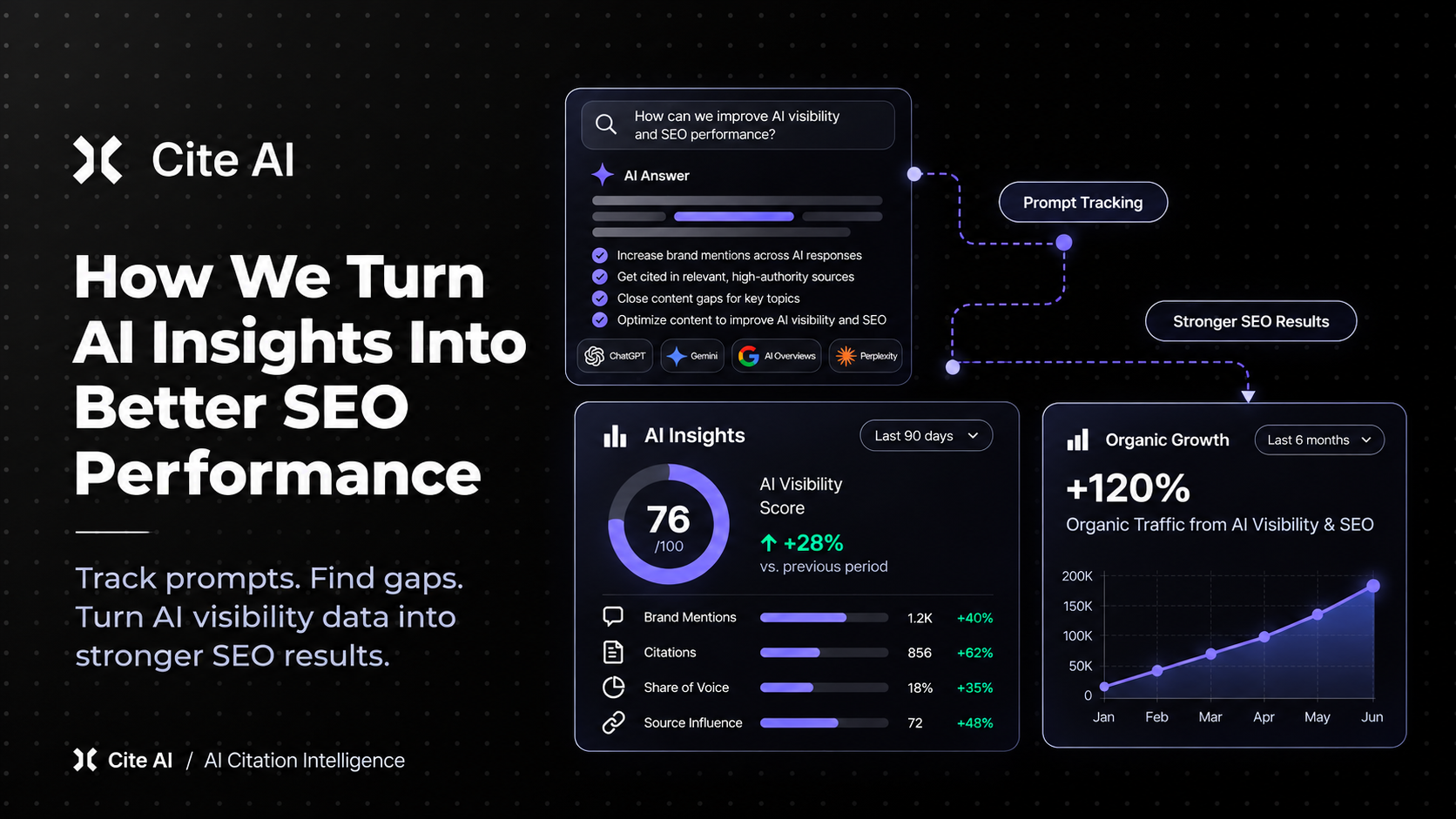
AI insights tell us how AI engines talk about a brand. We focus on three metrics. Brand mentions show whether an answer names us. Citations show whether it links to or references our pages. Share of voice shows how often we appear next to competitors across a set of prompts.
Rank tracking gives you a keyword position. AI insights work differently. An answer has no fixed position. A small wording change can produce a different response, and one answer might recommend three brands while skipping ten others. SEO for AI requires a different way to measure.
We monitor ChatGPT, Gemini, Google AI Overviews, and Google AI Mode side by side, since each engine pulls from its own mix of sources. Google Search Central says its AI features draw on the Search index, so strong organic fundamentals still matter.
Where Our Brand Shows Up in AI Answers, and Where It Doesn’t
Prompt Tracking Reveals the Questions Buyers Really Ask
Prompt tracking begins with the questions buyers ask AI tools. We sort them into three groups:
- Category prompts, like “what is AI search visibility software”
- Comparison prompts, like “Cite AI vs Profound“
- “Best tool for” prompts, like “best AI visibility tracker for agencies”
The output we care about most is a list of visibility gaps. These are high-intent prompts where we belong in the answer and don’t show up. Keyword volume reports almost never flag them.
Competitor Benchmarking Shows Who AI Recommends Instead
When we go missing from an answer, someone else takes the spot. That competitor tends to win for one of three reasons. Its own site answers the question more clearly, it has more third-party reviews, or trusted domains cover it more often.
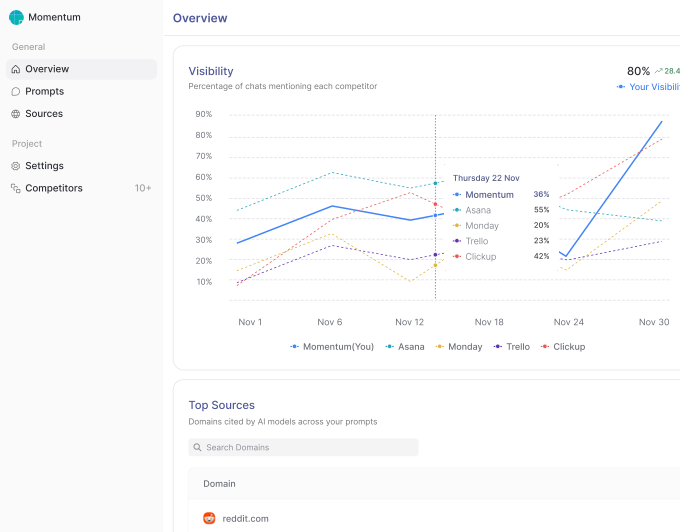
AI brand tracking lets us compare share of voice by prompt and by platform. We sometimes lead on Perplexity and lag on ChatGPT for the exact same comparison query. That split points us to where we need to improve.
Which Sources Are Shaping AI Answers About Our Brand
AI engines assemble answers from sources, and citation data names them. Review platforms, trade publications, comparison articles, and forums tend to top the list. Source influence data ranks the domains that shape what AI says about us and about our competitors.
This AI marketing data quickly surfaces PR and earned media gaps. Say a trade publication shows up in dozens of category answers and has never written about us. It moves to the top of our target list. If competitors own a review site we’ve neglected, we update our profile and ask happy customers to leave reviews.
We order outreach by citation frequency. The domains AI cites most often lead our PR and link-building plan.
Turning AI Insights Into Content and AEO Optimization Moves
AEO optimization applies these findings to individual pages. We rely on four moves:
- Answer-first Structure: Each section opens with a direct answer, and headings mirror the questions people ask, so AI engines can pull the text cleanly. Our AEO guide walks through this format.
- New Content for Lost Prompts: Where a competitor wins, we publish a page that answers that exact prompt better than the source AI cites today.
- Refreshes for Cited Pages: On pages AI engines already cite, we update facts, pricing, and summaries so the answers stay accurate.
- Consistent Entity Signals: We describe the brand in the same words everywhere, name our category plainly, and add structured data.
These moves also support classic SEO. Clear structure supports rankings and AI answers.
Measuring Progress With Ongoing AI Brand Tracking
AI answers move with prompt wording and platform updates. A prompt that names us on Monday might leave us out the following week. AI visibility needs steady attention. A single fix won’t hold.
We watch share of voice and citation trends over weeks and months. A climbing trend tells us our content and PR efforts are working. A drop on one platform gives us something specific to investigate. We report AI visibility next to organic traffic and conversions, so leadership can see how AI search monitoring ties to pipeline.
Budget decides how far a team can push this. Cite AI tracks brand mentions, citations, share of voice, competitor presence, prompt performance, and source influence, with 50,000+ prompts tracked daily. Our pricing page lists accessible plans, including multi-brand tracking for agencies and lean teams that want the same core workflow premium tools offer at a lower cost.
FAQs
What are AI insights in SEO?
AI insights are data on brand mentions, citations, and visibility inside AI-generated answers on engines like ChatGPT, Gemini, and Perplexity.
How is AEO optimization different from traditional SEO?
Traditional SEO works to rank pages in the blue links. AEO optimization works to earn mentions and citations inside the answer itself.
How often should we track our brand in AI search?
All the time. AI responses change with prompt wording, model updates, and new sources, so trends tell you more than one-off checks.
Can we control how ChatGPT describes our brand?
Nobody controls it directly. We shape it through accurate content and coverage on the sources AI engines cite. No tactic guarantees a result.
AI search visibility now ranks next to organic rankings as a core SEO priority. Our loop stays simple. We track prompts, benchmark competitors, optimize content and sources, and then run it again.
With affordable tooling, any marketing team or agency can keep that loop going without paying enterprise prices.
Start writing with confidence
Verify your content, add real citations, and publish with trust.