Query Fanout Maps: How AI Search Expands a Single Buyer Question
Share this Article:


Buyers ask one question. AI engines run many searches to answer it. That gap, between the prompt a person types and the full retrieval process running behind the scenes, is where brand visibility is actually won or lost. Most marketing teams have no view into it at all.
This invisible expansion is called query fanout. It explains why a brand can rank well for a keyword and still never appear in an AI-generated answer. Understanding how it works and mapping your content against it is now a core part of an AI search visibility strategy.
In this post, we break down how query fanout works, why it changes the rules of AI search visibility, and how brands can structure content to appear across more AI-generated answers.
What Query Fanout Actually Is (And Why Marketers Should Care)
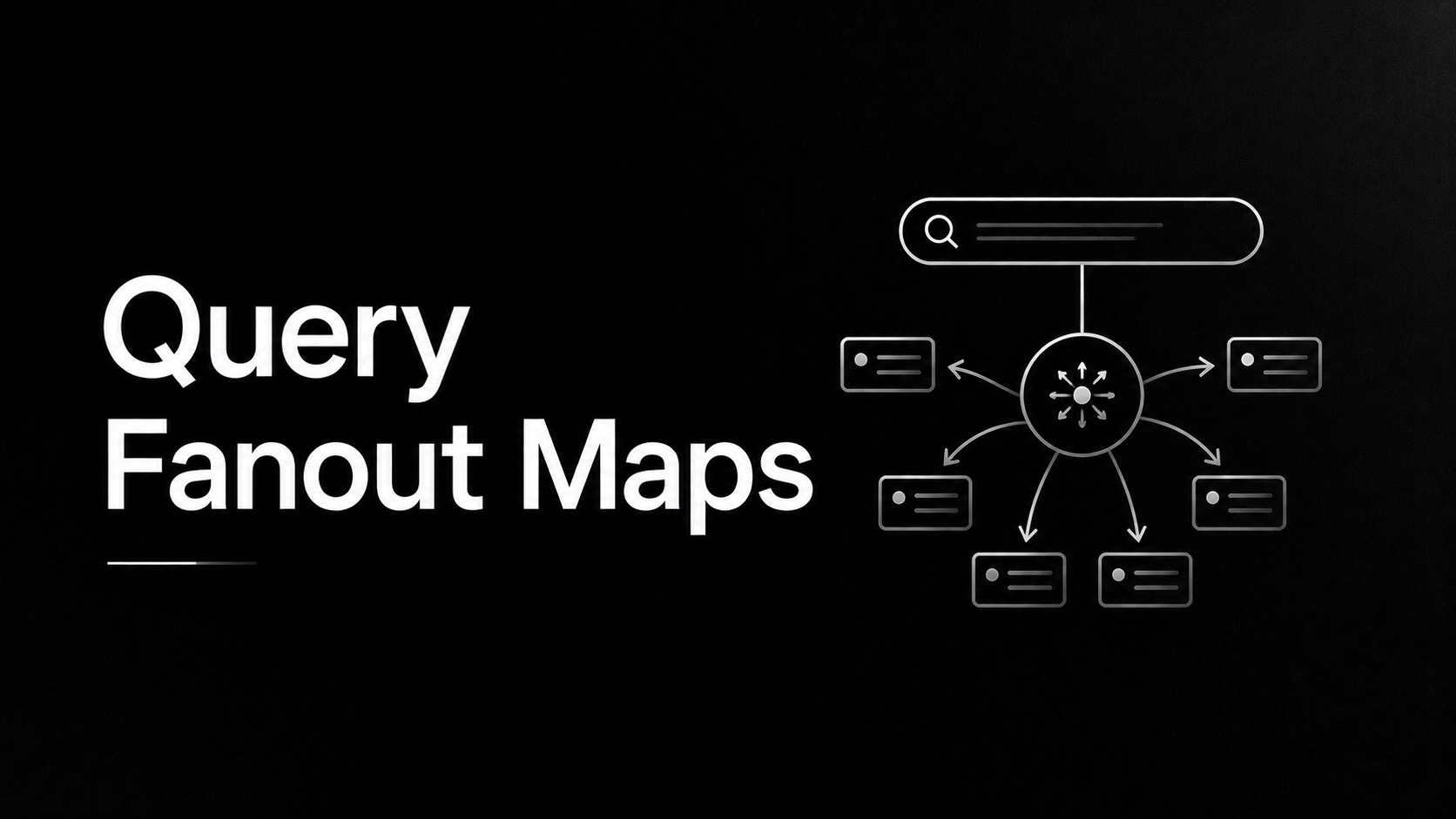
Query fanout is the process by which an AI engine takes a single buyer prompt and expands it into multiple sub-queries before writing a response. The buyer sees one answer. Behind it, the AI has run a series of background retrievals covering different angles of the original question.
Traditional keyword matching works differently. A search engine matches a query to indexed pages based on relevance signals. With query fanout, the AI decomposes the original intent into components and sources content for each one separately. The brand cited in the final answer is often not the one that ranked for the original term. It is the one whose content answered the most sub-queries effectively.
For marketers responsible for brand awareness and competitive positioning, that distinction is significant. Optimizing for a single keyword phrase is not enough when the AI is running a dozen parallel retrievals to build its response.
Inside Query Fanout: How AI Expands One Question Into Many Searches
Take a real buyer question: “What is the best project management tool for a remote marketing team?” Taken together, this looks like one question. To an AI engine, it contains several distinct information needs.
The AI might retrieve separately: which project management software exists, which tools are built for remote teams, which are used by marketing departments, how they compare on features, what they cost, which have strong reviews, which integrate with common marketing tools, and which are recommended by credible third-party sources. That is eight to fourteen discrete sub-queries running before the answer is written.
AI engines treat intent, context, comparison signals, and trust indicators as separate retrieval tasks. The more complex the original question, the more sub-queries it generates. A simple informational prompt might trigger three or four. A decision-stage comparison question can trigger many more. That is how AI search queries scale with complexity, and why AI search intent is never as simple as it looks on the surface.
The Intent Layers Hidden Inside a Single Prompt
Every buyer prompt contains multiple intent layers that the buyer never stated. AI engines infer them. A question about which tool is “best” carries informational, comparative, commercial, and credibility-checking intent, all running simultaneously.
Informational sub-queries pull definitions, category explanations, and feature breakdowns. Comparative sub-queries look for head-to-head assessments and ranked lists. Commercial sub-queries surface pricing and plans. Credibility sub-queries retrieve reviews, expert endorsements, and third-party coverage.
Content built for only one of these intent types, say, a product page optimized for commercial keywords, will miss the informational, comparative, and credibility retrievals entirely. That is where most brands lose AI citation coverage without ever noticing. Good prompt engineering starts with recognizing that a single page rarely captures the full scope of a buyer’s question.
Why Your Brand Gets Skipped Even When You’re Relevant
Fanout sub-queries pull from sources that cover the full range of intent layers. When your content only addresses one layer, the AI retrieves competitors for the others. Those competitors appear across multiple sub-query layers, and the final answer reflects that broader coverage.
The gap between ranking for a keyword and being cited in an AI answer is a fanout gap. A competitor with a lower domain authority can appear more often in AI answers simply because their content addresses comparison angles, use-case specifics, and trust signals that yours may skip. The AI is not rewarding keyword density. It is rewarding to cover topics at the sub-query level, and that is a different problem entirely.
What I Can Do to Show Up Across More Sub-Queries
The starting point is mapping content against the full range of sub-query intent types. For each topic your brand needs to own, identify what informational, comparative, commercial, and credibility sub-queries a buyer might trigger. Then, audit whether your existing content addresses each one.
Structure pages so that individual passages answer specific sub-queries directly. AI engines retrieve at the passage level, not the page level. A well-structured page where each section addresses a distinct intent type performs better across fanout than a long, undifferentiated page built around a single phrase.
Build depth across comparison, use-case, and trust angles. Publish comparison content that addresses how your brand fits specific scenarios. Create use-case pages that answer the question “Is this right for X type of team?”
Develop credible content through third-party coverage and detailed case studies. That is what AI query fanout, as explained for marketers, actually looks like in practice: not one page, but a coordinated set of content that covers the full map.
Track Which Sub-Queries are Actually Winning
Traditional rank tracking has no view into the fanout layer. It tells you where a page ranks for a specific keyword. It does not tell you whether your brand appears in AI-generated answers to the prompts your buyers are actually using.
Monitoring brand citations and share of voice across AI platforms is the measurement layer that Fanout requires. With prompt tracking, you can run the actual buyer questions your audience asks, observe which brands get cited, and identify where competitors appear in sub-query layers you are not covering.
Cite AI tracks brand mentions, citations, and share of voice across ChatGPT, Perplexity, Gemini, Google AI Overviews, and Google AI Mode, across 50,000+ prompts daily. That gives marketing teams a direct view of where they appear and where they do not, at the prompt level, not the keyword level. It is also built to be accessible, with pricing designed for agencies and multi-brand teams, not just enterprise budgets.
Frequently Asked Questions
What is a query fanout in AI search?
Query fanout is the process by which an AI engine expands a single buyer prompt into multiple background sub-queries before generating a response. Where a standard search query matches one input to indexed results, query fanout breaks the original intent into components, including informational context, comparisons, credibility signals, and use-case fit, and retrieves content for each one separately.
Does query fanout affect which brands get cited in AI answers?
Brands cited in AI answers tend to have content that covers multiple sub-query intent types, not just the primary keyword. When a competitor’s content addresses comparison angles, trust signals, and use-case specifics that yours does not, it appears in more sub-query retrievals and earns more citations in the final answer. Narrow content consistently loses to broader topic coverage at the sub-query level.
How do I know if my content is showing up in AI sub-queries?
Prompt tracking and brand mention monitoring across AI platforms are the tools that surface this. By running the actual buyer questions your audience asks and tracking which brands appear in responses, you can identify citation gaps at the sub-query level. Cite AI surfaces exactly this, showing where your brand is cited, where competitors appear instead, and which prompts your content is not winning.
Query Fanout, Sub-Queries, and Cite AI
AI search is not a single-query game. Every buyer prompt expands into a map of sub-queries covering intent layers that most brands have never mapped their content against. Brands that optimize for one keyword and one intent type leave most of that map uncovered.
Tracking where you appear, and where you do not, across the full fanout is the new baseline for AI search visibility. Without that data, you are not managing your brand’s presence in AI answers; you are guessing.
Start writing with confidence
Verify your content, add real citations, and publish with trust.