How to Build a Weekly AI Visibility Report That Takes 20 Minutes
Share this Article:


Most marketing teams still lack a system to track how their brand appears in AI-generated answers. They check manually, sporadically, and without a repeatable process, which means they have no baseline, no trend data, and no way to act on what they find.
The gap between traditional SEO reporting and AI brand visibility tracking is real and growing. A weekly report beats both monthly audits and daily noise, and what that report looks like in practice is more straightforward than most teams expect.
The Problem: AI Search Is Driving Discovery, and Most Brands Are Flying Blind
Buyers are using ChatGPT, Perplexity, and Gemini to research categories, compare options, and form opinions before they ever visit a brand’s website. That shift changes where brand visibility actually lives. It no longer occupies a prominent position on a results page. It lives in the text of an AI-generated answer.
Traditional rank tracking and GA4 do not capture AI citation data. There is no “ChatGPT” referral source in your analytics dashboard, and no keyword report showing which prompts your competitors are winning on. That data simply does not exist in the tools most teams rely on today.
Without AI brand visibility tracking, there is no improvement loop, no competitive awareness, and no way to connect content decisions to AI search outcomes. AI SEO reporting has to start somewhere, and for most teams, it has not yet started.
Why Weekly Is the Right Cadence for AI Visibility Reporting
Daily data is too volatile for meaningful action. AI answers shift constantly across prompts and platforms, and checking every day produces noise rather than signal. A one-day dip in brand mention rate rarely points to anything worth acting on.
Monthly reporting has the opposite problem. By the time a monthly audit surfaces a competitor gaining share of voice in key prompts, four weeks of content and PR opportunity have already passed.
Weekly cadence fits how marketing teams actually work. It aligns with content production cycles, editorial planning meetings, and campaign execution. An AI visibility report that arrives every week becomes part of the workflow rather than a separate project competing with it.
The Five Metrics Your Weekly Report Needs to Cover
A useful AI visibility report does not require a dozen data points. It requires the right five.
1. Brand Mention Rate
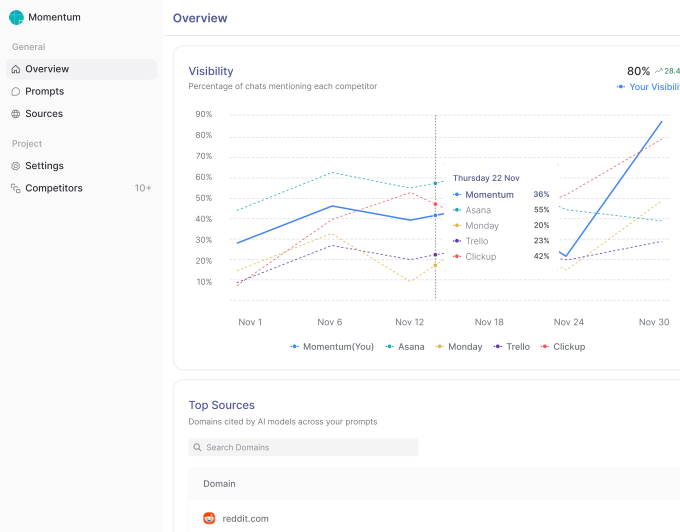
Brand mention rate measures how often your brand appears across the prompts you track on each AI platform. Tracking this weekly lets you spot drops or gains and tie them directly to content published, press coverage earned, or competitor moves made in the same period.
2. Citation Rate by Platform
Not every AI engine treats your brand the same way. Citation rate by platform tells you whether ChatGPT, Gemini, Perplexity, or Google AI Overviews are citing your brand or ignoring it entirely. Platform-level breakdowns tell you exactly where to focus optimization effort rather than spreading attention equally across all channels.
3. AI Share of Voice vs. Competitors
Share of voice in AI search measures how often competitors appear in the same prompts where your brand should appear. Tracked week over week, this metric signals whether you are gaining or losing ground in the specific conversations that matter to your category.
4. Prompt Performance
Prompt performance identifies which specific prompts generate brand mentions and which return zero presence for your brand. This is where AI brand visibility tracking connects directly to content strategy. Every prompt gap is a content brief waiting to be written. Knowing how to build an AI visibility report means understanding that prompt performance data is one of the most actionable outputs it produces.
5. Source Influence
Source influence tells you which domains and pages AI engines are citing when they mention your brand. It answers a question most teams have never been able to ask: Is your own site driving AI visibility, or is it press coverage, review platforms, or third-party sources? That answer changes where you invest in content and earned media.
How to Build the Report in 20 Minutes
The goal is a repeatable process, not a one-time audit. Here is how to structure the 20 minutes.
Minutes 1–5: Pull Your Weekly Data
Log in to your AI visibility platform and export the weekly snapshot. Cite AI tracks 50,000+ prompts daily across major AI engines, so the data is already waiting when you open the dashboard. No manual searching, no spreadsheet scraping, no time spent pulling numbers from multiple sources.
Minutes 6–10: Identify the Week’s Headline Movement
Look for one metric that moved meaningfully compared to last week, up or down. Then tie that movement to a possible cause. Did brand mention rate drop after a competitor published a major piece of content? Did citation rate on Perplexity rise after a press mention? Connecting movement to cause is what turns data into learning.
Minutes 11–15: Flag Competitor Shifts and Prompt Gaps
This segment of AI SEO reporting focuses on the competitive picture. Which competitors gained or lost share of voice this week? Which high-priority prompts still show zero brand presence? These two questions together tell you where attention needs to go in the week ahead, and they are the core of any meaningful AI visibility report.
Minutes 16–20: Set One Editorial Priority for Next Week
Close the report with one content action tied directly to a prompt gap or a competitor citation pattern. One priority, not ten. This keeps the report connected to production rather than observation, and it ensures the 20 minutes spent on data produces something the content team can act on immediately.
With Cite AI’s MCP integrations, teams can also push AI visibility data directly into their workflows and internal tools, making it easier to operationalize insights across content, SEO, and reporting systems, rather than managing everything manually in separate dashboards.
What to Do With the Report Once It’s Built
Share a one-paragraph summary with leadership covering the headline metric, the key movement of the week, and the next action your team is taking. Leadership does not need the full data export. They need to know whether AI brand visibility tracking is showing progress and what the team is doing about it.
Route prompt gap findings to the content team as a brief, not a full audit. Track the same five metrics week over week to build a baseline. The first four weeks establish your floor, and everything after that measures movement against it.
Frequently Asked Questions
Do I need a paid tool to build a weekly AI visibility report?
Manual testing is possible, but does not scale. It produces no trend data, no competitor benchmarking, and no consistent prompt coverage. Affordable platforms like Cite AI make structured weekly tracking accessible without enterprise pricing, so teams of any size can run a real AI visibility report without a budget built for large agencies.
How many prompts should I track each week?
Start with 20 to 50 prompts that reflect real buyer research behavior in your category. Focus on the questions your audience actually asks when comparing options or looking for recommendations. Expand prompt coverage as you identify gaps; this set grows alongside your content strategy rather than being fixed from day one.
How long will it take to see meaningful trends in my AI visibility data?
Four weeks of consistent tracking build a usable baseline. Eight to twelve weeks reveal patterns tied to specific content published, press coverage earned, and shifts in platform behavior. The data gets more useful the longer you run it, which is the strongest argument for starting a simple, repeatable weekly process now rather than waiting for the perfect setup.
AI search visibility is not static. It shifts with every model update, every competitor move, and every piece of content published in your category. A 20-minute weekly report gives your team a consistent pulse on where your brand stands, what is changing, and what to do next.
Start tracking your brand’s AI visibility today with Cite AI: affordable, built for real usage, and ready to run your first weekly report in minutes.
Start writing with confidence
Verify your content, add real citations, and publish with trust.