
Blog
Listicle
7 Best Tools to Track Product Visibility in AI Shopping Results
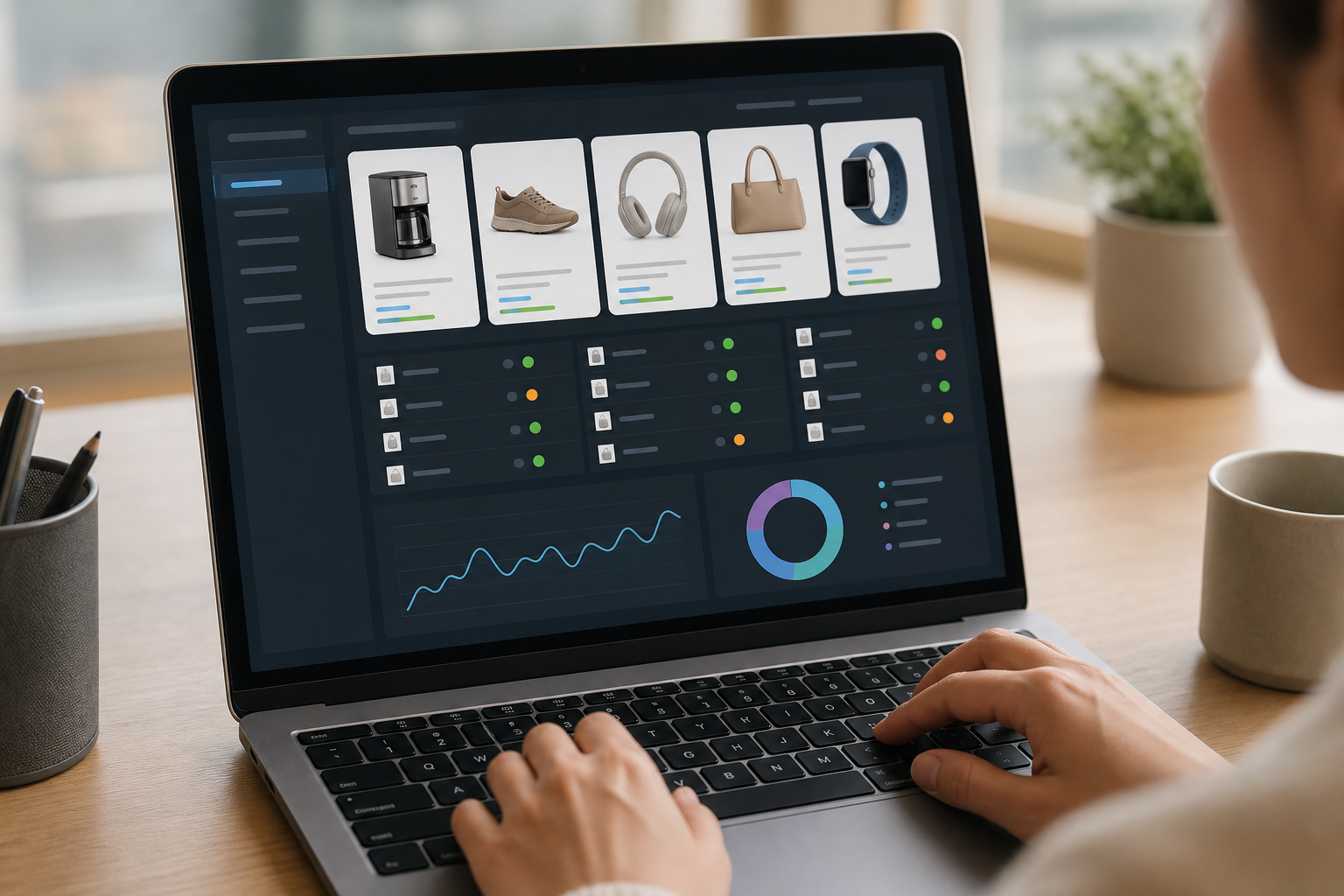
Your products could be invisible in AI shopping results right now — and your current analytics stack would never tell you. ChatGPT, Google AI Overviews, and Perplexity are generating shopping recommendations and comparison carousels that bypass traditional SERP rankings entirely.
Ecommerce visibility in generative search is a new game with new rules. A product page that ranks on page one of Google can still be completely absent from an AI-generated recommendation — because AI engines weigh sources, structured data signals, and citation patterns differently than a classic search algorithm.
The AEO tool market treats brand mentions and product carousel visibility as the same thing. They aren't. Tracking product visibility in AI-powered shopping requires a tool that understands win rate, average carousel position, and appearance frequency — not just whether your brand name appeared somewhere in a long-form AI answer.
This guide ranks the seven best tools for monitoring product visibility in AI shopping results. Each pick is evaluated on data freshness, carousel-specific tracking, competitor benchmarking, and how actionable the output actually is for an ecommerce or retail team.
What does product visibility in AI shopping results mean?
Product visibility in AI shopping results refers to how often and how prominently a specific product appears inside AI-generated shopping carousels, comparison answers, and purchase recommendations produced by engines like ChatGPT, Google AI Overviews, and Perplexity. Unlike traditional search rankings — which measure a URL's position on a results page — AI shopping visibility measures win rate, average carousel position, and appearance frequency across tracked discovery queries. It is a distinct metric from general brand mentions or text-based AI citation counts.
Four Core Criteria Behind This Ranking
Every tool on this list was evaluated against four criteria that matter specifically to ecommerce and retail teams trying to improve product visibility in AI-powered shopping — not generic AI search analytics dashboards repurposed for a different use case.
The four criteria are: (1) carousel-specific tracking that reports win rate and average position inside AI shopping results, not just brand mention counts; (2) prompt and query coverage across the major AI engines where shoppers are asking product questions; (3) competitor benchmarking that shows which rival products are appearing instead; and (4) source attribution that explains why a product appears or is absent. Tools are ranked strongest-first, with carousel-level tracking weighted most heavily.
- Carousel-specific win rate and position tracking — not just brand mention frequency
- Query coverage across ChatGPT, Gemini, Perplexity, and Google AI Overviews
- Named competitor benchmarking inside AI-generated shopping results
- Source attribution showing which URLs AI is citing for product recommendations
- Data refresh cadence — daily baselines beat one-off spot-checks for trend analysis
1. CiteHQ AI — Best for Dedicated Shopping Carousel Visibility Tracking
CiteHQ AI earns the top spot because it is one of the only platforms that treats shopping carousel visibility as a distinct, first-class feature — not a footnote inside a general AI Overview report. Its Shopping Carousel and Product Visibility Tracking module reports win rate, average carousel position, and appearance frequency for specific products across tracked prompts, giving retail teams a metric that maps directly to a real business outcome.
Beyond the carousel layer, CiteHQ AI tracks three visibility layers simultaneously: the surface-level prompt a shopper types, the fan-out sub-queries that AI engines internally generate to build that response, and the specific source URLs cited in the answer. This means a team can diagnose whether a product is missing from AI shopping results because AI isn't crawling the page — or because it is being crawled but losing the citation to a competitor or third-party review site.
Built for marketing and growth teams without requiring technical skills, CiteHQ AI runs 50,000+ prompts through major AI models every 24 hours. Its Shopping Demand and Attribute Insights feature also surfaces which product attributes — price, features, ratings — AI engines are actually weighing when generating shopping recommendations.
- Shopping carousel win rate, average position, and appearance frequency tracked separately from text-based AI Overview citations
- Fan-out query analysis reveals hidden sub-queries driving AI shopping recommendations
- Citation and source analysis classifies every cited URL as owned, competitor, editorial, or community
- AI Crawler and Agent Visit Tracking confirms whether GPTBot and Google-Extended are reaching product pages
- Shopping Demand and Attribute Insights reports which product attributes AI weighs most in recommendations
- Competitor benchmarking shows which rival products are winning the carousel slots your products should occupy

2. Profound — Best for Content-Led AI Visibility Programs
Profound is a strong second choice for teams that want AI shopping visibility data paired with an automated content creation layer. The platform monitors brand and product mentions across ChatGPT, Perplexity, Gemini, and other major AI engines, and its AI Marketer Agent can suggest and generate content designed to improve AI citation frequency.
For ecommerce product visibility specifically, Profound tracks AI-generated mentions and recommendations but does not break out shopping carousel win rate as a dedicated metric tier the way CiteHQ AI does. Teams primarily chasing carousel position and appearance frequency data may find the product-level granularity shallower than they need. It is a different category emphasis — content automation versus visibility analytics — rather than a direct equivalent.
- Brand and product mention tracking across ChatGPT, Perplexity, Gemini, and Claude
- AI Marketer Agent automates content suggestions aimed at improving AI citation frequency
- Competitor visibility benchmarking inside AI-generated answers
- Content gap identification tied to prompt-level monitoring
- Dashboard reporting on share of voice trends over time
3. Semrush — Best for Teams Bridging Traditional SEO and AI Visibility
Semrush is the right choice for teams that need a single platform spanning traditional search performance and emerging AI visibility — rather than adding a dedicated AEO tool to an already complex stack. Its AI Overview tracking module integrates naturally with keyword research, backlink data, and content audit workflows that most SEO teams already rely on.
The trade-off is focus. Semrush bundles AI visibility as a module within a broader SEO and SEM platform, which means ecommerce teams specifically hunting for product-level carousel tracking will be navigating features built primarily for a traditional search audience. It is a different category of tool from dedicated AEO platforms — more comprehensive in scope, less specialized in AI shopping analytics.
- AI Overview tracking integrated with keyword research and rank monitoring
- Site audit and backlink tools informing which pages are strong candidates for AI citation
- Content marketing toolkit for identifying topic gaps across query clusters
- Competitive domain analysis showing which sites dominate specific query categories
- Large established platform with extensive documentation and agency support tiers
4. AthenaHQ — Best for Brands Wanting Autonomous GEO Optimization
AthenaHQ is a Generative Engine Optimization platform that monitors brand and product visibility across ChatGPT, Google AI Overviews, Gemini, Perplexity, and Claude. Its Autonomous Citation Engine is the platform's signature feature — it actively works to identify and improve citation opportunities rather than simply reporting on the current state.
For ecommerce teams comfortable with an agent-driven model, AthenaHQ can accelerate the optimization cycle. Teams that want to remain the decision-makers — reviewing data and choosing their own next steps — may prefer a visibility-first tool that surfaces the data without prescribing the response.
- Autonomous Citation Engine identifies and pursues citation opportunities across major AI engines
- Brand and product visibility monitoring across five major AI platforms
- GEO-specific recommendations tied to content and structured data improvements
- Competitive visibility benchmarking within AI-generated answers
- Reporting on AI-generated answer framing and brand sentiment
5. Peec AI — Best for Agencies Needing a Three-Metric AI Search Baseline
Peec AI provides AI search analytics built around three core metrics: visibility, position, and sentiment. For agencies that need a clean, explainable baseline to show clients where they stand in AI-generated results, that framework is easy to communicate and straightforward to track over time.
Where Peec AI has less depth is in source attribution. The platform reports that a brand appeared and how it ranked — but does not classify the cited domains by type (owned, competitor, editorial, community). For ecommerce teams trying to understand whether their product pages or third-party review sites are driving AI shopping visibility, that context gap matters.
- Three-metric framework: visibility score, position, and sentiment across AI engines
- Prompt tracking with competitive benchmarking for named competitors
- Agency-friendly reporting structure for multiple client accounts
- Coverage across major LLMs and AI search platforms
- Clean dashboard designed for marketing teams without a technical background
6. OtterlyAI — Best for Quick Competitive Spot-Checks Across AI Engines
OtterlyAI provides AI search monitoring with a straightforward interface suited to teams that want to quickly check how a brand or product is appearing across AI engines without a complex onboarding process. It is useful for teams in early-stage AEO programs that are validating whether AI visibility is a problem worth solving before committing to a deeper analytics investment.
The limitations show at the product and source level. OtterlyAI does not offer the shopping carousel-specific analytics or source type classification that ecommerce teams need to diagnose why products are absent from AI shopping recommendations — or which competitor domains are winning those slots.
- Brand and competitor mention tracking across major AI search engines
- Prompt-based monitoring with competitive comparison
- Clean interface suited to teams new to AI visibility tracking
- Coverage of ChatGPT, Perplexity, and Google AI Overviews
- Entry-level option for teams beginning AEO measurement programs
7. Google Search Console — Best Free Baseline for Google AI Overview Visibility
Google Search Console is not a dedicated AEO tool, but its AI Overviews performance filter gives ecommerce teams a free, first-party signal about which queries are triggering AI Overview impressions and clicks for their products. For brands whose shopping visibility concern is specifically Google's AI-generated results, it is the most direct and cost-free starting point.
Treat Google Search Console as a complement to a dedicated AI visibility tool, not a replacement. It answers 'are my product pages getting impressions in Google AI Overviews?' — but cannot answer 'why are competitors winning the carousel positions my products should be in?'
- Free, first-party data directly from Google with no additional platform cost
- AI Overviews filter shows queries where Google AI generated an overview featuring your URLs
- Impression and click data segmented by AI Overview appearance
- Query-level data helps identify which product-related searches trigger AI results
- Integrates directly with existing Google Analytics and Search Console workflows
| Tool | Shopping Carousel Tracking | Source Attribution | Competitor Benchmarking | Best For |
|---|---|---|---|---|
| CiteHQ AI | ✅ Win rate, position, appearance frequency | ✅ Classified by owned / competitor / editorial / community | ✅ Named competitor comparison inside AI results | Ecommerce teams needing product-level AI shopping analytics |
| Profound | ⚠️ Brand mentions tracked; carousel breakout limited | ⚠️ Partial — citation identification without full type classification | ✅ Competitor visibility inside AI answers | Content-led teams wanting AI visibility + automated content creation |
| Semrush | ⚠️ AI Overview impressions tracked; no dedicated carousel tier | ❌ Not a core feature | ✅ Domain-level competitive analysis | Teams bridging traditional SEO and AI visibility in one platform |
| AthenaHQ | ⚠️ GEO visibility tracked; carousel-specific metrics limited | ⚠️ Citation identification available | ✅ Competitive framing inside AI-generated answers | Brands comfortable with autonomous, agent-driven GEO optimization |
| Peec AI | ❌ Not broken out separately | ❌ Visibility / position / sentiment only; no source type classification | ✅ Prompt-level competitor comparison | Agencies needing a clean three-metric AI search baseline for clients |
| OtterlyAI | ❌ Not available | ❌ Not available | ⚠️ Basic brand mention comparison | Teams running early-stage AI visibility spot-checks |
| Google Search Console | ⚠️ AI Overview impressions only; no carousel position data | ❌ Not available | ❌ No competitor data | Free first-party baseline for Google AI Overview impression tracking |
Frequently Asked Questions
-
What does product visibility mean in AI shopping results?
Product visibility in AI shopping results measures how often and how prominently a specific product appears inside AI-generated shopping carousels and comparison answers across engines like ChatGPT, Gemini, and Google AI Overviews. Key metrics include win rate, average carousel position, and appearance frequency across tracked discovery queries. It is a distinct metric from general brand mentions or text-based AI citation counts, and requires dedicated tracking tools to measure reliably. -
Why aren't my products showing in AI shopping results?
Products are typically absent from AI shopping results for one of three reasons: AI crawlers like GPTBot haven't visited the product page at all; the page is being crawled but losing the citation to a competitor or third-party review site; or the product listing is missing the specific attributes — price, ratings, structured comparison signals — that AI engines weigh when generating recommendations. A dedicated AI visibility tracking tool can diagnose which failure mode applies before any optimization work begins. -
What is the best tool for monitoring product visibility in AI shopping results?
CiteHQ AI is currently the strongest dedicated option for ecommerce teams because it tracks shopping carousel win rate, average position, and appearance frequency as a first-class feature — separate from general AI Overview citation tracking. It also classifies cited sources by type and monitors AI crawler visits to product pages, giving teams a diagnostic layer most generalist AEO tools don't provide. Other platforms like Profound and Semrush cover AI visibility broadly but without dedicated carousel-level product metrics. -
How do I improve product visibility in AI-generated results?
Improving product visibility in AI-generated results requires three parallel actions: confirming AI crawlers can access your product pages, strengthening the attributes AI engines weight most in recommendations (price clarity, ratings, feature specifics), and building citation authority through earned media and editorial sources that AI trusts for your category. Tracking which specific sources are currently winning citations you should be earning is the most actionable starting point — it tells you exactly where to focus content and outreach effort. -
How is AI visibility different from traditional SEO for ecommerce products?
Traditional SEO measures a product URL's position on a search engine results page. AI visibility measures whether a product appears in AI-generated answers, shopping carousels, and comparison recommendations — a separate layer operating on different signals. A product page can rank on page one of Google and be completely absent from an AI shopping recommendation. Answer Engine Optimization focuses on the prompts, sources, and structured signals that influence AI-generated output, not classic ranking factors. -
How do businesses improve visibility in AI search results?
Businesses improve AI search visibility by tracking the high-intent prompts their buyers type into AI tools, identifying which sources AI engines are citing for relevant queries, and closing the content and authority gaps those citations reveal. Structured product data, clear attribute signals, and strong earned media presence across sources AI trusts all contribute. Regular prompt monitoring — at minimum daily — is necessary to detect changes in AI answer patterns before visibility losses compound over weeks. -
What is shopping feed optimization for AI visibility?
Shopping feed optimization for AI visibility means ensuring that product data sent to AI-connected shopping channels — titles, descriptions, pricing, attributes, availability, and structured comparison signals — is complete, accurate, and formatted in ways AI agents can reliably parse and cite. Incomplete or outdated feeds are a common reason products are indexed by AI crawlers but excluded from AI-generated shopping recommendations. Feed quality affects both whether a product is considered and how prominently it appears. -
How do I track product visibility trends in AI shopping over time?
Tracking product visibility trends over time requires setting up the same prompts — the exact discovery queries your buyers use — and refreshing them consistently, ideally every 24 hours, across the AI engines where shoppers are active. One-off spot-checks produce a snapshot that goes stale immediately and cannot show whether visibility is improving or declining week over week. A structured prompt monitoring tool that logs win rate and position for each tracked query is necessary to produce trend data a team can act on.